Learn why your dog may pace at night, which signs deserve attention, and practical ways to help your dog settle and sleep more comfortably. This guide explains the most important points in clear, practical steps.
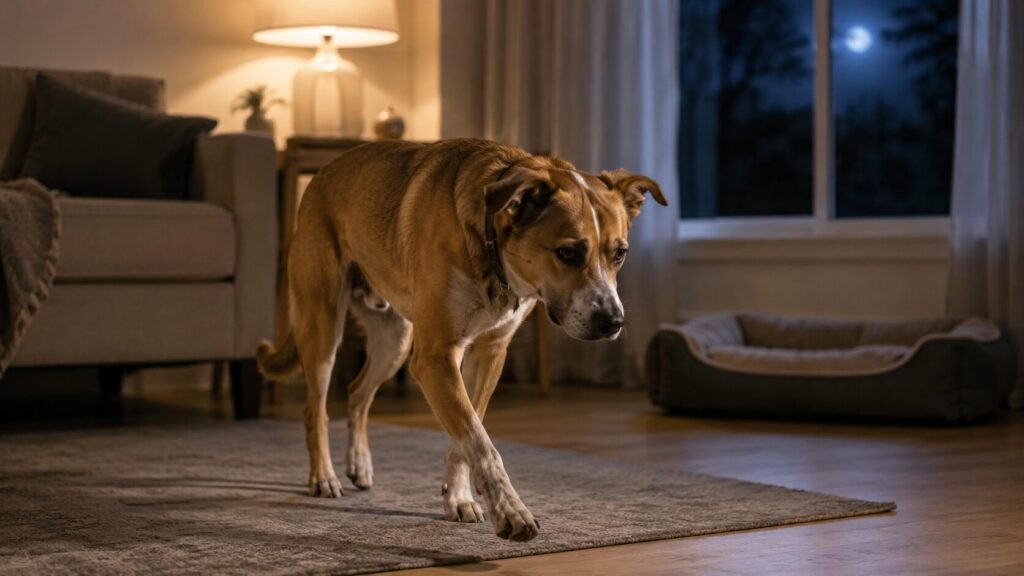
Why Dogs Pace Instead of Resting
Pacing is repetitive walking that seems to have no clear destination. A dog may move between rooms, circle a bed, stand up and lie down repeatedly, or follow family members around the house. Sometimes the reason is simple, such as needing a bathroom break. In other cases, nighttime pacing can point to discomfort, anxiety, age-related changes, or a medical problem.
The most useful clue is the pattern. Notice when the pacing starts, how long it lasts, what your dog does before it begins, and whether other symptoms appear at the same time. A single restless night is different from a new behavior that happens every evening.
Common Reasons a Dog Paces at Night
One common cause is excess energy. Dogs that sleep much of the day or receive little physical and mental activity may still feel alert at bedtime. A late meal, a change in routine, unfamiliar noises, visitors, storms, or another pet in the home can also make it harder to settle.
Physical discomfort is another possibility. Joint pain, an upset stomach, itching, breathing difficulty, or the need to urinate can keep a dog moving. Senior dogs may pace because of reduced vision, hearing changes, pain, or canine cognitive dysfunction. Dogs with cognitive decline can appear confused after dark, become stuck in corners, stare at walls, or reverse their normal sleep schedule.
Signs That May Help You Identify the Cause
Watch your dog’s body language. Panting, trembling, hiding, yawning, lip licking, and staying close to you may suggest fear or anxiety. Repeated stretching, a tense belly, drooling, vomiting, or refusing food can suggest digestive discomfort. Limping, stiffness, difficulty lying down, and reluctance to use stairs may point to pain.
Also check whether your dog asks to go outside, drinks more water than usual, has accidents, coughs, or seems disoriented. Write down what you observe. A short video can be useful if you need to show the behavior to a veterinarian.
How to Help Your Dog Settle at Bedtime
Start with a calm and predictable evening routine. Offer an appropriate walk earlier in the evening, give your dog time to use the bathroom, and avoid intense play immediately before bed. Keep the sleeping area quiet, comfortable, and at a stable temperature. Senior dogs may benefit from a supportive bed, a night-light, and clear pathways without clutter.
Provide gentle mental activity during the day through sniffing walks, simple training, food puzzles, or safe chew items. Avoid punishing pacing. Punishment can increase fear and does not address the reason behind the behavior. Instead, guide your dog calmly to a resting place and reward relaxed behavior.
When to Contact a Veterinarian
Contact a veterinarian when pacing is new, frequent, worsening, or accompanied by pain, vomiting, a swollen abdomen, breathing changes, weakness, collapse, confusion, loss of appetite, or major changes in thirst and urination. Sudden restlessness with repeated attempts to vomit and a bloated abdomen can be an emergency.
Even without dramatic symptoms, ongoing nighttime pacing deserves attention. A veterinarian can check for pain, digestive disease, urinary problems, medication effects, anxiety, and age-related cognitive changes. Treating the underlying cause is more effective than simply trying to make the dog sleep.
Final Thoughts
Nighttime pacing is a symptom, not a diagnosis. Routine, activity, and a comfortable sleep area may solve mild restlessness, but repeated pacing should not be ignored. Track the pattern, look for additional signs, and seek veterinary guidance when the behavior is persistent or sudden.
Frequently Asked Questions
Why does my dog pace and pant at night?
Pacing and panting can be caused by anxiety, heat, pain, digestive discomfort, medication effects, or another medical issue. Persistent or intense symptoms should be discussed with a veterinarian.
Do senior dogs pace more at night?
They can. Arthritis, reduced senses, urinary needs, and canine cognitive dysfunction may all make senior dogs more restless after dark.
Should I walk my dog before bed?
A calm evening walk and a final bathroom break can help. Avoid exhausting exercise or highly stimulating play immediately before bedtime.
Can anxiety cause nighttime pacing?
Yes. Noise, separation concerns, changes in the home, storms, or unfamiliar routines can cause restless walking and difficulty settling.
When is dog pacing an emergency?
Seek urgent care if pacing is accompanied by a swollen abdomen, repeated unproductive retching, breathing trouble, collapse, severe pain, or sudden weakness.