Clean a stainless steel sink safely with practical daily and deep-cleaning steps that reduce buildup, water spots, and scratching. This guide breaks down the topic in a clear and practical way for everyday readers.
Stainless Steel Is Durable but Not Indestructible
A stainless steel sink handles daily use well, but it can still develop water spots, soap film, mineral buildup, and scratches if cleaned carelessly. The good news is that routine maintenance usually keeps the surface in good condition.
The main goal is to clean effectively without using tools or products that can damage the finish.
Daily Cleaning Basics
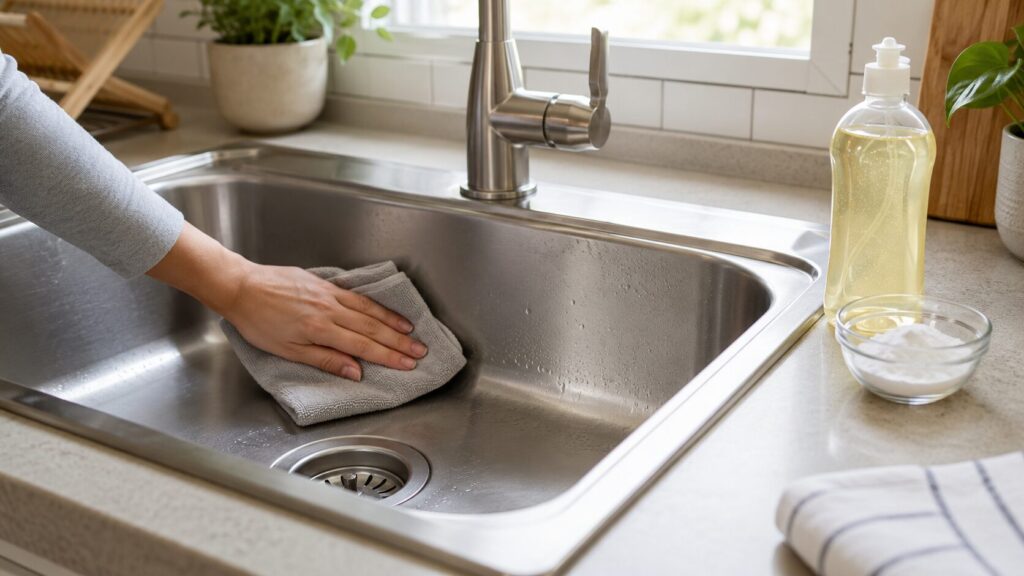
Rinse the sink after use and remove food particles so they do not dry in place. Apply a small amount of dish soap or a mild cleaner with a soft sponge or cloth, then rinse thoroughly.
Drying the sink with a microfiber cloth helps prevent water spots and mineral residue, especially in areas with hard water.
How to Handle Buildup and Stains
For dullness or light mineral deposits, a paste of baking soda and water can be useful. Apply it gently and rub with a soft cloth or nonabrasive sponge in the direction of the grain.
Rinse well and dry. For stubborn hard-water marks, a mild acid-based approach such as vinegar may help on some sinks, but always test carefully and avoid prolonged exposure if the manufacturer advises against it.
What to Avoid
Avoid steel wool, harsh scouring pads, and abrasive powders that can scratch the finish. Chlorine bleach and other aggressive chemicals may also damage stainless steel or surrounding fixtures if used improperly.
Do not leave cast iron cookware, steel cans, or wet sponges in the sink for long periods, because they can leave rust-like marks on the surface.
Polishing and Restoring Shine
After cleaning, buff the sink dry with a microfiber cloth. Some homeowners use a tiny amount of food-safe mineral oil or a stainless-steel-specific product to enhance appearance, but this step is optional and should be done according to manufacturer guidance.
Always wipe in the direction of the visible grain for the most even result.
Build Better Daily Habits
Frequent gentle cleaning is easier than waiting for heavy buildup. Rinse after messy cooking, dry the sink at the end of the day, and clean the drain area regularly.
A sink that is used often can still look good when maintenance is simple and consistent.
Final Thoughts
A stainless steel sink stays in better condition when cleaned gently and dried regularly. Mild products, soft tools, and attention to the grain help remove buildup without creating unnecessary scratches.
Frequently Asked Questions
Can I use baking soda on a stainless steel sink?
Yes, often in a mild paste, as long as you use a soft cloth or nonabrasive sponge.
Why does my sink look cloudy?
Water spots, soap film, or mineral deposits are common causes.
Should I use steel wool?
No. It can scratch the finish and may leave particles that create rust-like marks.
How do I remove water spots?
Regular drying and gentle cleaning with suitable products usually helps prevent and remove them.
Can vinegar damage stainless steel?
Short, careful use may help with mineral deposits, but always follow manufacturer guidance and avoid long exposure if not recommended.