Create a cleaner, more functional entryway with simple decluttering steps, storage zones, and habits that reduce daily mess at the door. This guide breaks down the topic in a clear and practical way for everyday readers.
Why Entryways Get Messy So Fast
The entryway is a transition zone where shoes, bags, jackets, keys, mail, and umbrellas collect quickly. Because items arrive and leave every day, clutter builds faster there than in many other parts of the home.
The solution is usually not more decoration. It is a clear system that fits what actually happens at the door.
Start by Removing Everything
Take everything out of the area so you can see the space clearly. Discard trash, recycle packaging, and move unrelated items to their proper rooms. Return only the things that truly belong near the entrance.
This reset makes it easier to decide what the entryway really needs rather than organizing layers of accumulated clutter.
Identify Daily Essentials
Most entryways only need a few categories: shoes currently in use, outerwear, bags, keys, and incoming mail. If pet items, umbrellas, or sports gear regularly pass through the space, give them defined spots too.
Keep the number of stored items realistic. Too many backup shoes or jackets can overwhelm a small area and make the system harder to maintain.
Use Simple Storage Zones
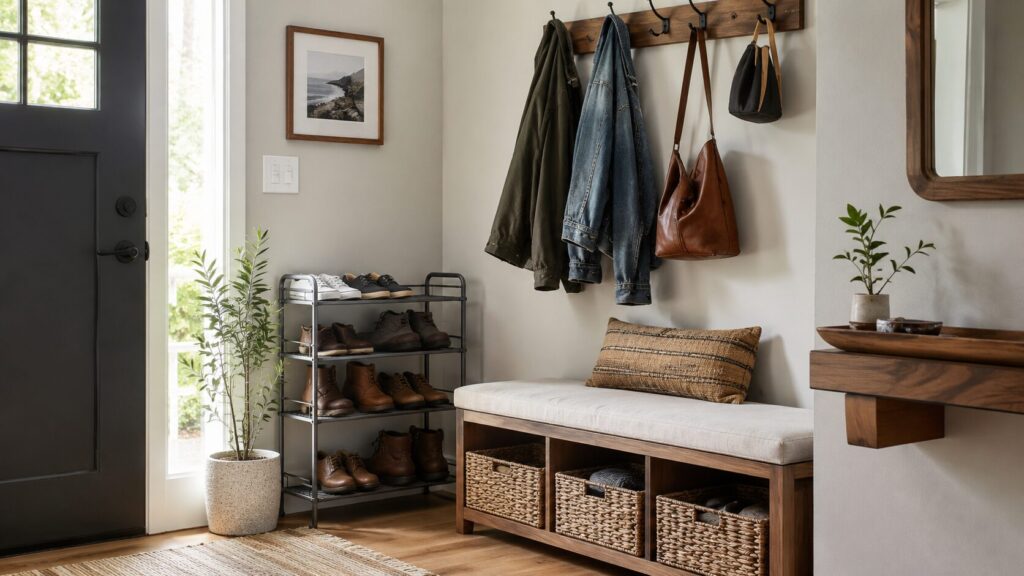
A tray or small bowl can hold keys and pocket items. Hooks work well for coats and bags. A shoe rack, basket, or bench with storage can keep the floor clearer. A vertical organizer can help when square footage is limited.
Assign each family member a consistent spot if multiple people share the same entryway. The goal is visible, easy-to-use storage rather than hidden overflow.
Control Paper Before It Spreads
Mail often becomes the most persistent clutter source. Sort it immediately. Recycle unwanted items at once and place action papers in a single designated tray or folder.
Avoid using the entry table as a temporary holding zone for everything, because temporary piles often become permanent.
Create Habits That Support the System
Decluttering works best when paired with small routines. Return shoes to the rack, empty bags regularly, and do a quick reset once or twice a week. If the system stops working, simplify it instead of adding more containers.
A functional entryway should make leaving and arriving easier, not slower.
Final Thoughts
An organized entryway depends on limits and visibility. Keep only the items that support daily transitions, give them clear homes, and maintain the area with brief regular resets rather than occasional major cleanups.
Frequently Asked Questions
What is the most important item in an entryway?
There is no single answer, but easy access to keys, shoes, and outerwear usually matters most.
How can I organize a very small entryway?
Use vertical storage, wall hooks, narrow shoe racks, and a small catchall tray.
Should I keep all shoes in the entryway?
Usually no. Keep only the shoes currently in regular use near the door.
How do I stop mail from piling up?
Sort it immediately and use one small tray or folder for items that require action.
What if my entryway has no closet?
Freestanding hooks, benches with storage, and compact wall-mounted solutions can still create structure.