Discover why your cat follows you from room to room and learn how affection, curiosity, routine, hunger, and stress can influence this behavior. This guide explains the most important points in clear, practical steps.
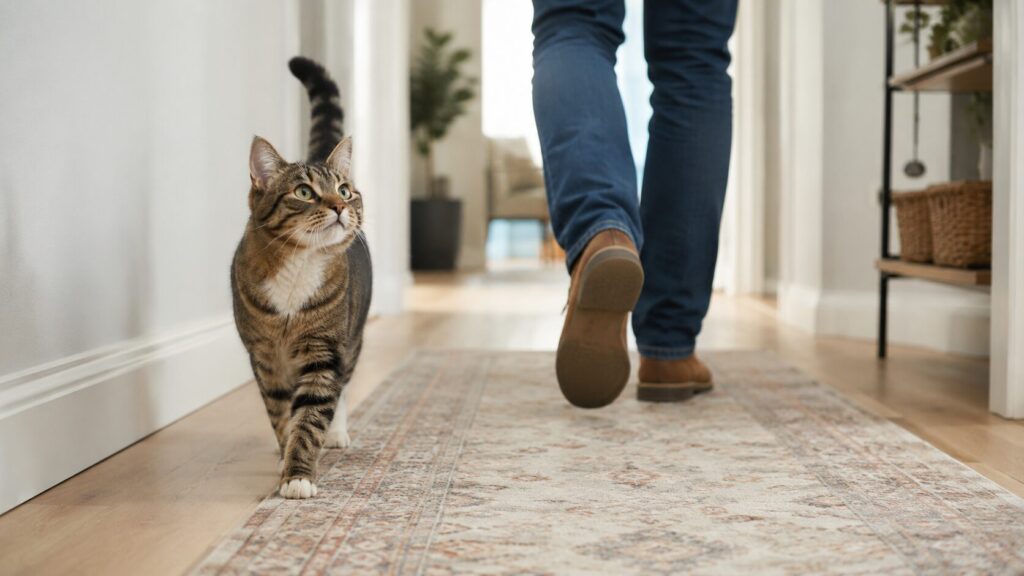
Following You Is Often Normal Cat Behavior
Cats are sometimes described as independent, but many form strong social bonds with their people. A cat may follow you into the kitchen, bathroom, office, and bedroom simply because being near you feels safe and rewarding. Your movements also create activity, sounds, scents, and opportunities that are interesting to an observant animal.
The meaning depends on context. A relaxed cat with a neutral tail, soft eyes, and normal eating and sleeping habits is usually showing curiosity or companionship. A cat that suddenly becomes unusually clingy, vocal, restless, or withdrawn may be communicating a need or reacting to a change.
Your Cat Enjoys Your Company
Some cats prefer to socialize by staying nearby rather than sitting on a lap. Following can be a quiet form of affection. Your cat may see you as a trusted companion and choose the same room because your presence is familiar.
Cats also learn daily routines. They know when you prepare food, open a favorite window, sit at a desk, or go to bed. By following you, they stay close to predictable events and may receive attention, play, warmth, or a comfortable place to rest.
Curiosity and Environmental Stimulation
Cats are alert to movement. When you walk into another room, you may be changing the environment in a way that invites investigation. Opening a cabinet, running water, moving a chair, or carrying a bag can turn an ordinary moment into something worth inspecting.
Indoor cats with limited stimulation may follow people more often because human activity is the most interesting part of the home. Window views, climbing areas, rotating toys, scratching surfaces, hiding spots, and short interactive play sessions can give them more choices throughout the day.
Food, Attention, and Learned Rewards
If following has led to treats, meals, petting, or play, your cat may repeat it. This does not mean the bond is not genuine. It simply means cats are good at learning which behaviors produce useful results.
Try to notice whether the behavior increases near mealtimes or when you enter a specific room. A consistent feeding schedule can reduce constant food-related following. Reward calm behavior at appropriate times rather than giving food every time your cat walks behind you.
Stress, Aging, or Health Changes
Some cats become more attached when they feel uncertain. Moving, new visitors, a new pet, construction noise, changes in work schedules, or the loss of a familiar person can increase following. Older cats may seek reassurance if their hearing, vision, mobility, or cognitive function changes.
A sudden increase in clinginess can also occur with pain or illness. Contact a veterinarian if the behavior appears with weight loss, increased thirst, appetite changes, vomiting, litter box changes, excessive vocalization, hiding, weakness, or unusual aggression.
How to Support a Cat That Follows You Constantly
Keep routines predictable and provide several comfortable resting areas around the home. Offer daily interactive play with wand toys or other safe toys that allow stalking and chasing. Food puzzles can add mental stimulation, while shelves and cat trees provide vertical space.
Do not push your cat away harshly. If you need space, redirect the cat to a bed, perch, toy, or puzzle. The goal is not to stop normal social behavior, but to make sure your cat can also relax independently.
Final Thoughts
A cat that follows you is often expressing trust, curiosity, or interest in your routine. Look at the whole picture rather than the behavior alone. When eating, sleeping, grooming, and litter box habits remain normal, following is usually harmless. Sudden clinginess with other changes deserves veterinary attention.
Frequently Asked Questions
Does my cat follow me because it loves me?
Affection may be one reason. Cats often stay close to people they trust, although curiosity, routine, food, and comfort can also influence the behavior.
Why does my cat follow me into the bathroom?
Bathrooms contain interesting sounds, running water, closed doors, and a predictable chance to receive your attention.
Is it bad if my cat follows me all day?
Not necessarily. It is usually fine when the cat appears relaxed and can eat, sleep, play, and spend time alone without distress.
Can boredom make a cat clingy?
Yes. Indoor cats may depend heavily on human movement for stimulation when they lack play, climbing spaces, window views, or puzzles.
When should I call a veterinarian?
Call when following begins suddenly or occurs with appetite changes, weight loss, excessive thirst, litter box problems, pain, confusion, or major changes in behavior.