A small closet can become messy very quickly.
When space is limited, even a few extra items can make everything feel crowded. Clothes get pushed together, shoes pile up, shelves become cluttered, and it becomes harder to find what you need.
The good news is that a small closet does not have to feel frustrating.
With the right organization system, you can make a small closet feel cleaner, easier to use, and more functional. You do not need a luxury walk-in closet or expensive custom storage. Most of the time, small changes make the biggest difference.
This guide shares practical small closet organization ideas that actually work in real homes.
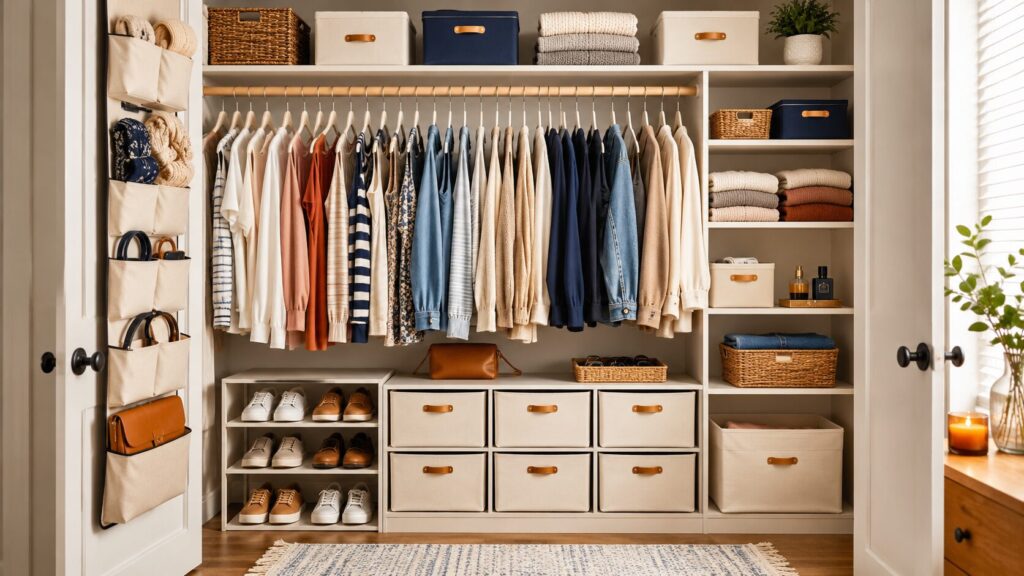
Start by Emptying the Closet
Before you organize a small closet, take everything out.
This may feel like extra work, but it helps you see exactly what you own and how much space you really have.
When everything stays inside the closet, it is easy to move clutter from one side to another without solving the problem.
Place everything on your bed, floor, or a clean surface. Then group similar items together.
Separate:
Clothes
Shoes
Bags
Accessories
Seasonal items
Storage boxes
Items that do not belong in the closet
Once everything is visible, it becomes much easier to decide what should stay.
Remove What You Do Not Use
Small closets work best when they only hold items you actually use.
If your closet is full of clothes you rarely wear, shoes that are uncomfortable, or boxes you never open, organization will always feel difficult.
Before adding bins, hangers, or shelves, declutter first.
Ask yourself:
Do I wear this regularly?
Does this fit well?
Is this still in good condition?
Would I buy this again today?
Does this item belong somewhere else?
If the answer is no, consider donating, selling, recycling, or removing it from the closet.
The less you keep, the easier your closet becomes to maintain.
Keep Everyday Items Easy to Reach
A small closet should support your daily routine.
The items you use most often should be the easiest to access.
Place everyday clothes, shoes, and accessories at eye level or within comfortable reach. Store less-used items higher up, lower down, or in labeled bins.
For example, everyday shirts and pants can stay on the main rod. Seasonal sweaters can go on an upper shelf. Formal shoes can stay in a box or on a higher rack if you do not wear them often.
This simple change makes the closet easier to use because you are not digging through everything every morning.
Use Matching Slim Hangers
Bulky hangers can waste a surprising amount of space.
Slim hangers are one of the easiest upgrades for a small closet. They create a cleaner look and allow clothes to hang more evenly.
Matching hangers also make the closet feel less visually cluttered.
You do not need anything fancy. Simple slim hangers in one color can make a small closet look more organized immediately.
Avoid keeping random wire, plastic, and oversized hangers mixed together if they make the closet feel crowded.
A consistent hanger system helps the space feel calmer and easier to scan.
Organize Clothes by Category
When clothes are mixed together, it becomes harder to find what you need.
Group similar items together so the closet makes sense at a glance.
You can organize by:
Shirts
Pants
Dresses
Jackets
Work clothes
Casual clothes
Workout clothes
Seasonal items
Another option is to organize by color within each category. This can make the closet look more polished, but it is not required.
The most important thing is that your system feels easy to maintain.
If you usually choose outfits by type, organize by type. If you choose by color, organize by color. The best system is the one you will actually use.
Add Shelf Dividers
Closet shelves can become messy when stacks of clothing fall into each other.
Shelf dividers help separate folded items and keep piles from sliding.
They are especially helpful for:
Sweaters
Jeans
Towels
Bags
Blankets
Workout clothes
Seasonal clothing
If your closet has a top shelf, dividers can make it much easier to keep that area neat.
Without dividers, shelves often become one large pile of mixed items. With dividers, each section has a purpose.
Use Clear Bins for Small Items
Small closets often become messy because small items do not have a defined place.
Clear bins can help you group and contain items without hiding them completely.
Use bins for:
Scarves
Belts
Hats
Socks
Seasonal accessories
Travel items
Extra toiletries
Small bags
Clear bins are useful because you can quickly see what is inside.
If you prefer fabric or woven bins, add simple labels so you do not have to open every container to find one item.
Label Storage Boxes
Labels may seem like a small detail, but they can make a big difference.
When boxes are not labeled, they are easy to ignore or forget. You may end up opening several boxes before finding what you need.
Label boxes clearly with simple names such as:
Winter clothes
Extra bedding
Travel bags
Summer shoes
Accessories
Formal wear
Keep labels short and easy to read.
This is especially helpful for upper shelves, where boxes may be harder to access.
Use the Back of the Door
The back of the closet door is often wasted space.
If your closet has a hinged door, you can use an over-the-door organizer, hooks, or a slim rack.
This area can be useful for:
Shoes
Belts
Scarves
Hats
Small bags
Cleaning tools
Jewelry organizers
Choose a door organizer that fits your needs without making the closet feel crowded.
For a very small closet, the back of the door can add valuable storage without taking up shelf or floor space.
Add a Second Hanging Rod
If your closet has one tall hanging section, you may be wasting vertical space.
A second hanging rod can double your hanging area for shorter clothes.
This works well for:
Shirts
Blouses
Folded pants on hangers
Skirts
Kids’ clothes
Light jackets
Place one rod higher and another lower. This creates two levels of storage and makes better use of the closet height.
This idea is especially helpful in bedroom closets where most clothes do not need full-length hanging space.
Store Shoes Vertically
Shoes can take up a lot of floor space in a small closet.
Instead of letting them spread across the floor, use vertical storage.
A small shoe shelf, stackable shoe rack, hanging shoe organizer, or clear shoe boxes can help keep pairs together.
Keep everyday shoes easy to reach and store special-occasion shoes higher or lower.
Try not to keep shoes in a messy pile. When shoes are easy to see, you are more likely to wear what you own and less likely to buy duplicates.
Use Drawer Organizers for Accessories
If your closet has drawers, use organizers inside them.
Small accessories can quickly become messy when they are loose in a drawer.
Drawer organizers work well for:
Socks
Underwear
Jewelry
Belts
Hair accessories
Sunglasses
Watches
Small wallets
Instead of one crowded drawer, you create small sections for each type of item.
This makes it easier to find things and easier to put them away.
Store Seasonal Items Separately
A small closet should not hold every item in the same active space all year.
If you live somewhere with clear seasons, store off-season clothing in bins, under-bed storage, or higher shelves.
For example, heavy coats and winter sweaters do not need to take up prime closet space during summer.
Likewise, swimsuits and summer hats do not need to stay front and center during winter.
Rotating seasonal items keeps your small closet lighter and easier to use.
Use Hooks for Quick Storage
Hooks are simple, affordable, and useful in small closets.
You can place hooks on the side wall, inside the closet, or behind the door.
Hooks work well for:
Robes
Bags
Hats
Belts
Scarves
Light jackets
Tomorrow’s outfit
Avoid overloading hooks with too many items. If every hook is packed, the closet will still feel messy.
Use hooks for items you grab often or items that do not need to be folded or hung on a regular hanger.
Keep the Floor as Clear as Possible
A cluttered closet floor makes the whole closet feel smaller.
Shoes, bags, laundry, and random boxes can quickly turn the floor into a messy drop zone.
Try to keep the closet floor clear or use it only for specific storage.
For example, you can place one shoe rack, one storage bin, or one laundry basket on the floor.
Avoid using the floor as a place for items you do not want to deal with.
When the floor is clear, the closet instantly feels more organized.
Create a Donation Basket
One helpful closet habit is keeping a small donation bag or basket nearby.
When you try on something and realize you no longer wear it, place it directly in the donation basket.
This prevents unwanted clothes from going back into the closet.
Once the basket is full, donate or remove the items from your home.
This simple habit keeps clutter from building up again.
Avoid Overbuying Storage Products
It is easy to think that more bins and organizers will solve the problem.
But too many storage products can make a small closet feel even more crowded.
Before buying anything, decide what problem you are trying to fix.
Do you need more hanging space?
Do you need a better way to store shoes?
Do you need containers for accessories?
Do you need labels?
Buy only what supports your actual closet needs.
The goal is not to fill the closet with products. The goal is to make the closet easier to use.
Make the Closet Easy to Maintain
A good closet system should be simple enough to keep up with on busy days.
If it takes too much effort to put things away, the system will probably fail.
Make sure every item has a clear place.
Keep daily items easy to reach.
Use fewer categories instead of too many complicated sections.
Leave a little empty space if possible.
A closet that is packed completely full is harder to maintain. Even a small amount of breathing room can make the space feel easier to manage.
Do a Quick Weekly Reset
A small closet does not need a full reorganization every week.
But a short reset can keep it from becoming messy again.
Once a week, spend a few minutes checking the closet.
Put misplaced items back.
Refold messy stacks.
Return shoes to their place.
Remove empty hangers.
Move laundry out of the closet.
Check the donation basket.
This habit can take less than 10 minutes, but it helps your closet stay organized long term.
Common Small Closet Mistakes
One common mistake is keeping too many “just in case” items.
If you rarely use something, it should not take up the best space in your closet.
Another mistake is mixing unrelated items together.
When clothes, paperwork, cleaning products, and random boxes all share the same space, the closet becomes harder to manage.
A third mistake is not using vertical space.
Small closets often have unused height above the main rod or below hanging clothes.
A fourth mistake is hiding everything in bins without labels.
This can make the closet look clean for a while, but it becomes frustrating when you need to find something.
The best small closet systems are simple, visible, and easy to repeat.
Final Thoughts
A small closet can still be organized, useful, and easy to manage.
The key is to remove what you do not use, create clear categories, and make the most of the space you already have.
Use slim hangers, shelf dividers, clear bins, hooks, door storage, and vertical shoe storage to make the closet work better.
Most importantly, keep your system realistic.
You do not need a perfect closet. You need a closet that helps you find what you need and put things away without stress.
With a few smart changes, even a small closet can feel cleaner, calmer, and much more functional.
FAQ
How do I organize a small closet with too many clothes?
Start by removing everything and decluttering clothes you no longer wear. Then organize the remaining items by category and keep everyday clothes in the easiest-to-reach area.
What is the best way to save space in a small closet?
Use slim hangers, vertical shoe storage, shelf dividers, door organizers, and a second hanging rod when possible. These solutions help use vertical space more effectively.
Should I fold or hang clothes in a small closet?
Use both methods. Hang clothes that wrinkle easily or are used often. Fold bulky items like sweaters, jeans, and casual clothing to save hanging space.
How can I keep my closet organized long term?
Create a simple system and do a quick weekly reset. Put items back in their assigned places, remove clothes you no longer wear, and avoid overcrowding the closet.
Are closet organizers worth it?
Closet organizers can be helpful when they solve a specific problem. Before buying organizers, declutter first and identify what kind of storage you actually need.