Learn the common signs of boredom in indoor cats and how to improve daily enrichment with play, climbing space, scent, and feeding activities. This guide breaks down the topic in a clear and practical way for everyday readers.
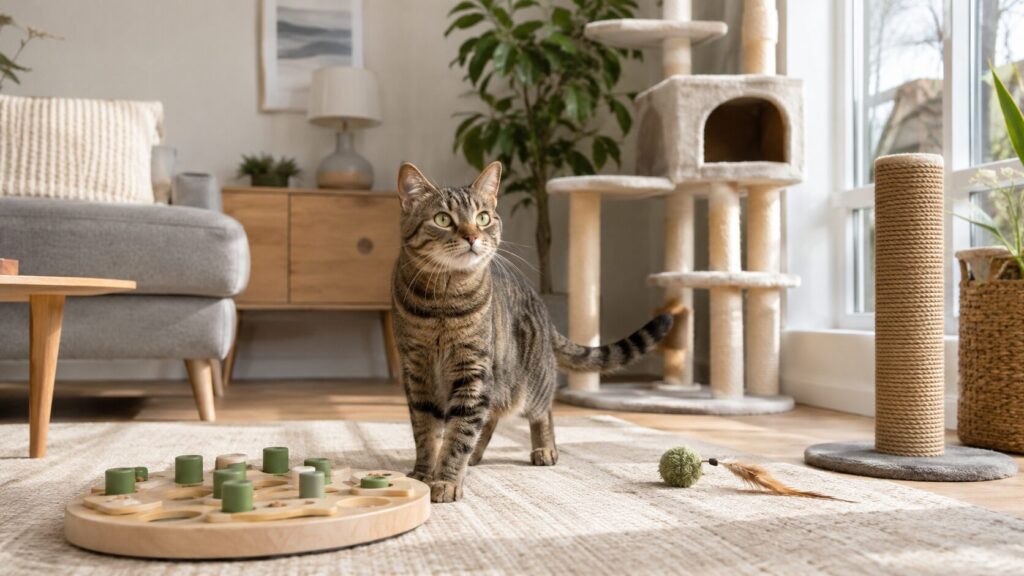
Indoor Cats Need Mental and Physical Stimulation
A safe indoor life can protect cats from many outdoor risks, but indoor living also means the environment must provide enough activity. Hunting instincts, climbing behavior, scratching, problem-solving, and exploration still exist even when a cat lives entirely inside the home.
When these needs are not met, boredom can affect behavior, activity level, and even weight. Not every unusual behavior means boredom, but a pattern of under-stimulation is common in some homes.
Common Signs of Boredom
A bored cat may sleep excessively, overeat, demand attention constantly, or meow more than usual. Some cats start knocking items off surfaces, scratching furniture more intensely, chasing ankles, or pouncing at night because they are seeking stimulation.
Other cats show subtler signs such as reduced interest in toys, low activity, overgrooming, or watching the outside world for long periods without other outlets. These behaviors can also have medical causes, so context matters.
Why Boredom Develops
The same toys left in the same place every day often lose value. Homes with little vertical space, few hiding areas, limited window views, and no structured play sessions may not provide enough challenge. Single-cat households can also become quiet and predictable when people are away for long periods.
Feeding from a bowl only can reduce natural foraging behavior. For many cats, enrichment is not just about more toys. It is about how the home allows stalking, climbing, solving, resting, and exploring.
How to Enrich an Indoor Cat’s Day
Use interactive play at least once or twice a day with wand toys or other safe movement-based toys that mimic prey. Allow stalking, chasing, pouncing, and a satisfying finish. Rotate toys instead of leaving all of them out at once.
Add climbing trees, shelves, scratching surfaces, and window perches. Food puzzles and treat hunts can slow eating and add problem-solving. Cardboard boxes, paper bags used safely, and scent enrichment such as silvervine or catnip can also help.
Build a Better Routine
Cats often respond well to predictable sessions of play, feeding, and quiet rest. A short play period before meals can be especially effective because it aligns with natural hunt-eat-rest patterns.
If your cat becomes active at night, shift stimulation to the evening and ensure there is enough daytime engagement. Even ten focused minutes of good play can be more helpful than random toy clutter.
When Behavior Needs Veterinary Attention
Contact a veterinarian if the cat shows sudden behavior changes, overgrooms to the point of skin damage, stops eating, drinks more than usual, loses weight, seems painful, or becomes unusually withdrawn. Medical problems can mimic boredom.
A healthy enrichment plan works best after ruling out pain, illness, or stress-related conditions.
Final Thoughts
Indoor boredom is not a personality flaw. It is often a sign that the environment is not offering enough appropriate outlets. Small changes in play, climbing space, food enrichment, and routine can create a more satisfying daily life for many cats.
Frequently Asked Questions
How much play does an indoor cat need?
Many cats benefit from one or two focused interactive play sessions each day, although the ideal amount depends on age and energy level.
Can boredom make a cat aggressive?
It can contribute to chasing, biting, or rough play when the cat lacks other ways to release energy.
Are puzzle feeders worth it?
Yes. They add mental stimulation, encourage foraging, and can slow fast eating.
Why does my cat race around at night?
Nighttime activity can happen when a cat sleeps much of the day and does not receive enough stimulation in the evening.
How do I know if the problem is boredom or illness?
If changes are sudden, intense, or accompanied by appetite, litter box, grooming, or weight changes, consult a veterinarian.