A dying houseplant can be frustrating.
One week, the plant looks healthy and green. Then suddenly, the leaves turn yellow, the stems droop, the soil looks strange, or the plant starts losing leaves every day.
If you are new to plant care, it is easy to think the plant is already too far gone.
But many struggling houseplants can recover if you understand what is causing the problem.
A plant may look unhealthy because of too much water, not enough water, poor light, bad drainage, pests, temperature changes, or old soil. The key is to look at the signs and make simple changes before the damage gets worse.
This guide will help you understand how to save a dying houseplant step by step.
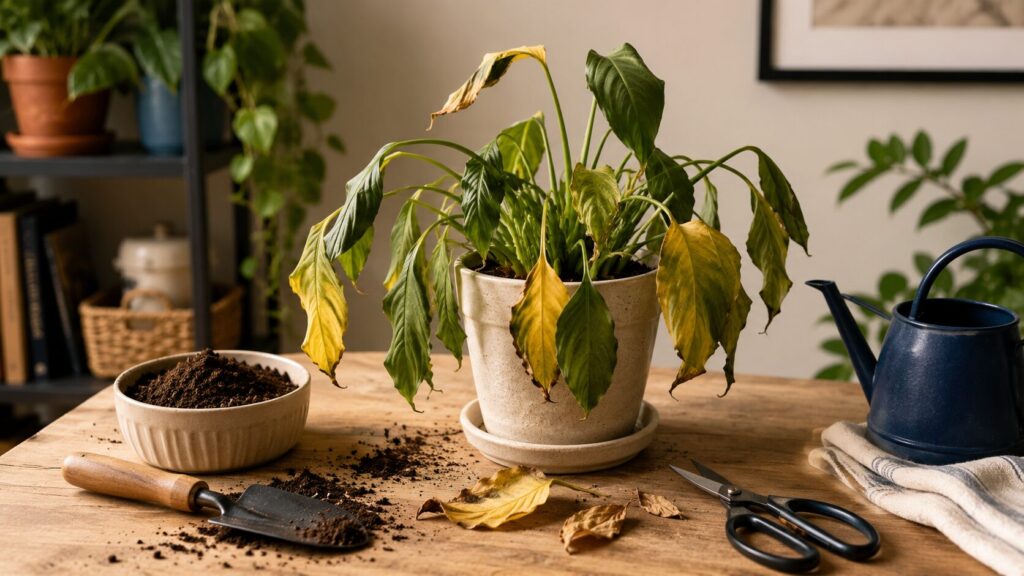
Look Closely Before Doing Anything
When a houseplant starts looking unhealthy, the first reaction is often to water it immediately.
But watering is not always the answer.
In fact, giving more water to a struggling plant can make the problem worse if the plant is already overwatered.
Before you do anything, take a closer look at the whole plant.
Check the leaves, stems, soil, pot, roots, and location.
Ask yourself:
Are the leaves yellow, brown, crispy, soft, or drooping?
Is the soil dry, wet, compacted, or moldy?
Does the pot have drainage holes?
Is the plant near a window, heater, air conditioner, or dark corner?
Are there small insects, sticky spots, or webbing on the leaves?
Did you recently move the plant?
Did you recently repot it?
A quick inspection can help you understand what the plant is trying to tell you.
Check the Soil First
The soil is one of the best clues when a houseplant is struggling.
Touch the soil with your finger.
If the top inch feels very dry, the plant may need water.
If the soil feels wet, heavy, or soggy, the plant may be getting too much water.
If the soil feels hard and compacted, water may not be reaching the roots properly.
If the soil smells bad, the roots may be rotting.
Many indoor plant problems begin in the soil because the roots depend on it for air, moisture, and support.
Healthy roots need water, but they also need oxygen. When soil stays too wet for too long, roots can suffocate and rot.
Before changing anything else, understand what is happening in the pot.
Signs Your Plant Is Overwatered
Overwatering is one of the most common reasons houseplants die.
Many people water too often because they think more water means better care. But most indoor plants do not want constantly wet soil.
Signs of overwatering may include:
Yellow leaves
Soft or mushy stems
Wet soil that does not dry out
Leaves dropping even when the soil is moist
Mold on the soil surface
A sour or rotten smell
Brown spots with yellow edges
If your plant is overwatered, stop watering immediately.
Move the plant to a brighter area with indirect light and allow the soil to dry.
If the soil is very wet or smells bad, you may need to remove the plant from the pot and check the roots.
Healthy roots are usually firm and light-colored.
Rotten roots may look brown, black, soft, or mushy.
Trim away rotten roots with clean scissors, then repot the plant in fresh, well-draining soil.
Signs Your Plant Is Underwatered
A plant that does not get enough water can also look like it is dying.
Underwatered plants often look dry, weak, or crispy.
Signs of underwatering may include:
Dry soil pulling away from the sides of the pot
Drooping leaves
Crispy brown leaf edges
Curling leaves
Slow growth
Leaves that feel thin or dry
A lightweight pot
If the soil is extremely dry, water may run straight through the pot without soaking in.
In this case, water slowly and evenly until moisture reaches the root area.
For very dry plants, you can place the pot in a shallow tray of water for a short time so the soil can absorb moisture from the bottom.
After the soil is evenly moist, let the excess water drain.
Do not leave the plant sitting in water for too long.
Check the Pot for Drainage
A houseplant pot should usually have drainage holes.
Without drainage holes, extra water has nowhere to go. This can keep the soil too wet and increase the risk of root rot.
If your plant is struggling in a pot without drainage, consider moving it to a pot with drainage holes.
You can still place that pot inside a decorative outer pot if you like the look.
This gives you style and better plant health.
If you use a saucer under the pot, empty it after watering so the roots are not sitting in water.
Good drainage is one of the simplest ways to prevent future plant problems.
Give the Plant the Right Light
Light problems can make a plant look weak, pale, stretched, or burned.
Different plants need different light levels.
Some plants like bright indirect light. Others can handle lower light. Some need several hours of direct sun.
If a plant is not getting enough light, it may show signs such as:
Slow growth
Small new leaves
Long, stretched stems
Pale leaves
Leaning toward the window
Dropping leaves
If a plant is getting too much direct sun, it may show signs such as:
Brown patches
Crispy leaves
Faded color
Dry leaf edges
Scorched spots
Move the plant gradually if you think light is the problem.
A plant that has been in a dark corner may not adjust well if you suddenly place it in strong direct sun.
Bright, indirect light is a safe choice for many common houseplants.
Remove Dead or Damaged Leaves
Dead leaves can make a plant look worse than it is.
They can also take energy away from new growth if the plant is trying to maintain damaged parts.
Use clean scissors to remove leaves that are fully brown, crispy, mushy, or clearly dead.
If only the tip of a leaf is brown, you can trim just the damaged edge.
Do not remove too much healthy growth at once.
If the plant is already stressed, heavy pruning can add more stress.
Start by removing the worst leaves and give the plant time to respond.
This simple cleanup can make the plant look better immediately and help you see what is still healthy.
Check for Pests
Sometimes a plant looks like it is dying because pests are feeding on it.
Common indoor plant pests include spider mites, fungus gnats, mealybugs, scale, aphids, and thrips.
Look closely at the leaves, especially the undersides.
Check the stems, soil surface, and new growth.
Signs of pests may include:
Tiny insects
Sticky residue
Small webs
White cotton-like spots
Yellow speckled leaves
Black dots
Leaves curling or deforming
If you find pests, isolate the plant from your other plants.
Wipe leaves gently with a damp cloth.
For many common pests, insecticidal soap or neem oil may help when used properly according to the product instructions.
You may need to repeat treatment several times because pests can return.
Look for Root Rot
Root rot is serious, but it does not always mean the plant is impossible to save.
It usually happens when roots stay wet for too long.
Signs of root rot may include:
Yellowing leaves
Soft stems
Wilting even when soil is wet
Bad smell from the soil
Black or mushy roots
Soil that never seems to dry
To check for root rot, gently remove the plant from the pot.
Look at the roots.
Trim away any rotten roots with clean scissors.
Remove as much soggy old soil as possible without damaging healthy roots.
Repot the plant in fresh soil and a pot with drainage holes.
After repotting, water lightly and avoid overwatering while the plant recovers.
Do Not Fertilize a Very Weak Plant
When a plant is struggling, fertilizer may seem like a quick solution.
But fertilizer is not medicine.
If the plant is stressed from overwatering, pests, root rot, or poor light, fertilizer can make the situation worse.
A weak plant needs stable conditions first.
Fix watering, drainage, light, and pests before feeding the plant.
Once the plant shows signs of recovery, such as new leaves or stronger stems, you can consider using fertilizer during the active growing season.
Always follow the instructions on the fertilizer label.
Too much fertilizer can burn roots and damage the plant.
Repot Only When Necessary
Repotting can help a plant, but it can also stress it.
Do not repot automatically unless there is a clear reason.
A plant may need repotting if:
The soil is soggy and smells bad.
The roots are rotting.
The plant is extremely root-bound.
The soil is compacted and does not absorb water.
The pot has no drainage.
The plant has outgrown the pot.
If the plant is only slightly unhappy, try adjusting water and light first.
When repotting, choose a pot only slightly larger than the current one.
A pot that is too large can hold extra moisture and increase the risk of overwatering.
Understand Yellow Leaves
Yellow leaves are one of the most common plant problems.
They can happen for many reasons.
A few older yellow leaves may be normal, especially near the bottom of the plant.
But many yellow leaves at once may signal a problem.
Common causes include:
Overwatering
Underwatering
Low light
Nutrient problems
Root stress
Pests
Sudden temperature changes
Do not assume all yellow leaves mean the same thing.
Check the soil, roots, light, and watering routine before deciding what to do.
If the soil is wet and leaves are yellow, overwatering may be the issue.
If the soil is very dry and leaves are crispy, underwatering may be more likely.
Understand Brown Leaves
Brown leaves can also mean different things depending on how they look.
Crispy brown edges often happen because of dry soil, low humidity, too much direct sun, or inconsistent watering.
Soft brown spots may be linked to overwatering, disease, or leaf damage.
Brown tips can sometimes happen from mineral buildup, dry air, or stress.
Remove fully dead leaves and adjust the plant’s care slowly.
Avoid making too many changes at once.
If you move the plant, repot it, water it heavily, fertilize it, and prune it all in one day, it may become even more stressed.
Move the Plant Away From Stressful Spots
Indoor plants can struggle when they are placed near temperature extremes.
Avoid placing plants directly beside:
Heating vents
Air conditioners
Drafty windows
Radiators
Fireplaces
Frequently opened exterior doors
Very hot windows
Plants usually prefer stable conditions.
A room that feels comfortable for people is often comfortable for many houseplants, as long as the plant also gets the right light.
If your plant is near a vent or draft, move it to a more stable location.
Give the Plant Time to Recover
A houseplant does not recover overnight.
Even after you fix the problem, damaged leaves may not turn green again.
The real sign of recovery is new healthy growth.
Look for:
New leaves
Firmer stems
Less leaf drop
Soil drying at a normal pace
Improved color
Stable growth
Be patient.
After changing the plant’s care, give it time before making more adjustments.
Too many changes can confuse the recovery process.
Create a Better Watering Routine
Many plant problems come from inconsistent watering.
Instead of watering on the same day every week, check the soil first.
Different plants dry out at different speeds depending on light, pot size, soil type, season, and room temperature.
A simple watering routine is:
Check the soil once a week.
Water only if the plant needs it.
Water deeply until excess drains out.
Empty the saucer after watering.
Let the soil dry according to the plant’s needs.
This approach is better than watering every plant on the same strict schedule.
Choose Easier Plants Next Time
If your plant does not survive, do not give up on houseplants completely.
Some plants are simply harder to care for than others.
Beginners may have better results with forgiving plants such as:
Snake plant
ZZ plant
Pothos
Spider plant
Heartleaf philodendron
Cast iron plant
Chinese evergreen
These plants can usually handle small mistakes better than delicate plants.
Choosing the right plant for your home makes plant care much easier.
Simple Recovery Plan for a Dying Houseplant
If you feel unsure where to start, follow this simple plan.
Check the soil.
Stop watering if the soil is wet.
Water slowly if the soil is extremely dry.
Check for drainage.
Move the plant to bright indirect light.
Remove dead leaves.
Inspect for pests.
Check roots if the plant smells bad or keeps wilting.
Repot only if needed.
Wait and watch for new growth.
This step-by-step approach helps you avoid doing too much at once.
Common Mistakes to Avoid
One common mistake is watering a plant every time it looks sad.
Drooping can happen from too much water or too little water, so always check the soil first.
Another mistake is placing plants in decorative pots without drainage.
A beautiful pot can still harm a plant if water gets trapped inside.
A third mistake is fertilizing a sick plant too soon.
Fix the main care problem before adding fertilizer.
Another mistake is moving the plant constantly.
Plants need time to adjust.
Finally, many people give up too early.
Some plants need several weeks to show signs of recovery.
Final Thoughts
A dying houseplant is not always a lost cause.
Many plants can recover when you identify the problem and make simple changes.
Start by checking the soil, water, drainage, light, leaves, pests, and roots. Remove dead growth, avoid overwatering, and give the plant time to adjust.
The most important thing is to respond to what the plant actually needs, not what you guess it needs.
With patience and the right care, a struggling houseplant may become healthy again.
Even if one plant does not survive, the experience can help you become a better plant owner next time.
FAQ
Can a dying houseplant come back to life?
Yes, many struggling houseplants can recover if the roots and stems are still healthy. The best approach is to identify the problem, adjust watering and light, remove dead leaves, and give the plant time.
How do I know if my plant is overwatered?
An overwatered plant may have yellow leaves, soft stems, wet soil, leaf drop, mold on the soil, or a bad smell from the pot. The soil may stay wet for a long time after watering.
Should I cut dead leaves off my plant?
Yes, you can remove fully dead, brown, crispy, or mushy leaves with clean scissors. This helps the plant look better and makes it easier to focus on healthy growth.
Why are my houseplant leaves turning yellow?
Yellow leaves can be caused by overwatering, underwatering, low light, pests, root problems, or normal aging. Check the soil and plant conditions before deciding what to change.
Should I repot a dying plant?
Repot only when necessary. A plant may need repotting if the soil is soggy, roots are rotting, the pot has no drainage, or the plant is severely root-bound.