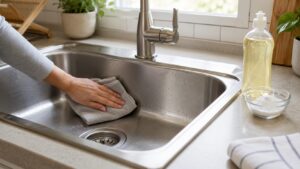
Organize the cabinet under your kitchen sink with safer storage zones, leak protection, simple containers, and easy access to daily supplies. This guide explains the most important points in clear, practical steps.
Start With Safety, Not Containers
The cabinet under a kitchen sink is often difficult to organize because pipes, drains, a garbage disposal, and cleaning products compete for limited space. Before buying bins, remove everything and inspect the cabinet.
Look for damp wood, stains, swelling, rust, loose plumbing connections, pest activity, and expired or leaking products. Fix plumbing problems before reorganizing. A neat cabinet cannot protect the home from an active leak.
Remove What Does Not Belong
Discard empty containers and products you no longer use according to local disposal instructions. Move food, paper goods, pet supplies, and items that can be damaged by leaks to another location.
Avoid storing highly reactive chemicals together. Keep products in their original labeled containers. Never transfer cleaners into food or beverage bottles. If children or pets can access the cabinet, install an appropriate safety lock and consider storing hazardous products in a higher locked location.
Create Simple Storage Zones
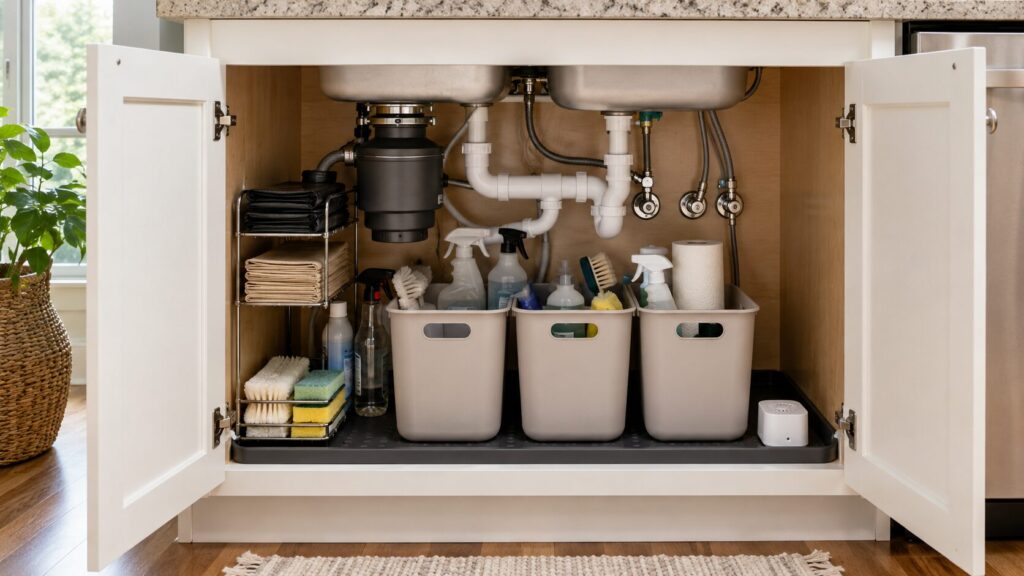
Group items by purpose. One bin may hold daily dishwashing supplies, another may hold surface cleaners, and a third may hold spare sponges or trash bags. Use bins with handles so you can remove a group without reaching around plumbing.
Keep the most frequently used items near the front. Place backup products toward the back only when they remain easy to inspect. Avoid stacking unstable containers around pipes.
Work Around Plumbing
Measure the interior around the drain and disposal before choosing organizers. Narrow bins, divided caddies, and low drawers may fit better than one large container. An adjustable tension rod can hold lightweight spray bottles, but it must be secure and should not press against plumbing.
Do not block shutoff valves, cleanouts, filters, or disposal access. You should be able to reach these components quickly during a leak or repair.
Add Leak Protection
Use a waterproof cabinet mat or shallow tray that fits the base and has a raised edge. This can contain small drips and make cleaning easier, but it is not a substitute for repair.
A simple water leak alarm can provide an early warning. Place it where water is most likely to collect, following the manufacturer’s instructions. Check the cabinet periodically instead of assuming the alarm or mat will handle every problem.
Maintain the System
Once a month, glance at the pipes, cabinet base, and product containers. Wipe spills, remove empty packages, and confirm that labels remain readable. Review child-safety measures as children grow and habits change.
Keep the system simple. Too many small boxes can reduce usable space and hide leaks. The best setup allows you to see the cabinet floor and remove supplies quickly.
Final Thoughts
A safe under-sink cabinet should provide clear access to plumbing, simple groups of supplies, and early visibility of leaks. Declutter first, protect the cabinet base, keep chemicals in labeled containers, and avoid complicated organizers that hide important areas.
Frequently Asked Questions
What should not be stored under the kitchen sink?
Avoid food, paper products, valuable items, and anything that could be damaged by leaks. Hazardous cleaners may need a higher locked location.
Can I store cleaning products together?
Group similar products, but do not store damaged containers or mix chemicals. Keep every product in its original labeled package.
Are pull-out drawers useful under a sink?
They can be, as long as they fit around plumbing and do not block valves or maintenance access.
How can I protect the cabinet from leaks?
Use a waterproof raised-edge mat or tray, consider a leak alarm, and inspect plumbing regularly.
How often should I clean under the sink?
A quick monthly inspection is useful, with deeper cleaning whenever spills, leaks, or clutter appear.