Keeping your home organized can feel difficult when your schedule is already full.
Between work, family, errands, meals, laundry, and everyday responsibilities, it is easy for clutter to build up before you even notice it. A few items left on the counter can quickly turn into a messy kitchen. One pile of clothes can become an entire bedroom chair covered with laundry.
The good news is that staying organized does not require a perfect home or hours of cleaning every day.
For most people, the best solution is not a huge weekend reset. It is a set of small habits that make your home easier to manage, even when life gets busy.
This guide will show you simple, realistic ways to keep your home organized without feeling overwhelmed.
Start With Realistic Expectations
One of the biggest mistakes people make with home organization is expecting their home to look perfect all the time.
That is not realistic for most households.
A home is meant to be lived in. People cook, work, relax, sleep, bring things home, use items, and move from room to room. Some mess is normal.
The goal is not perfection. The goal is control.
An organized home should make your daily life easier. You should be able to find what you need, move through your space comfortably, and reset rooms without spending hours cleaning.
When you stop chasing a perfect home, it becomes much easier to build habits that actually last.
Use the “One-Minute Rule”
A simple way to prevent clutter from growing is to use the one-minute rule.
If a task takes less than one minute, do it right away.
This can include:
Putting shoes by the door
Throwing away junk mail
Hanging up a jacket
Putting a cup in the sink
Wiping a small spill
Returning a remote to its place
Closing cabinet doors
These tiny actions may not seem important, but they stop small messes from turning into bigger ones.
When you are busy, you may not have time for a full cleaning session. But you usually have time for one-minute tasks throughout the day.
The more often you handle small things immediately, the less you have to clean later.
Give Every Item a Home
Clutter often appears because items do not have a clear place to go.
When something does not have a home, it usually ends up on a counter, chair, table, or floor.
To keep your home organized, every common item should have a simple place where it belongs.
Keys can go in a bowl near the entryway.
Mail can go in one small tray.
Shoes can stay on a rack or mat.
Cleaning supplies can stay under one sink.
Chargers can stay in a drawer or basket.
Pet supplies can stay in one cabinet or bin.
The easier the system is, the more likely you are to use it.
Avoid creating storage systems that are too complicated. If putting something away takes too many steps, you probably will not do it when you are tired.
Simple storage usually works best.
Focus on Daily Reset Zones
Not every room needs the same level of attention every day.
Instead of trying to organize your whole home constantly, focus on the areas that affect your daily routine the most.
These are your reset zones.
For many people, the most important reset zones are:
The kitchen counter
The dining table
The entryway
The bathroom sink
The living room sofa area
The bedroom floor
When these areas are under control, the whole home feels calmer.
Choose two or three areas that make the biggest difference in your home. Spend a few minutes resetting them each day.
This is much easier than trying to clean every room at once.
Create a 10-Minute Evening Reset
A short evening reset can make mornings much easier.
You do not need to deep clean. The goal is simply to return the home to a more manageable state before the next day begins.
Set a timer for 10 minutes and move through the most visible areas of your home.
You can:
Clear the kitchen counter
Put dishes in the dishwasher
Fold or move blankets
Throw away trash
Put shoes where they belong
Move laundry to a basket
Place toys, books, or random items in their proper spots
This habit works because it is short enough to feel doable.
Even on busy days, 10 minutes can make a noticeable difference. It also prevents clutter from piling up for several days in a row.
Use Baskets to Control Quick Clutter
Baskets are one of the easiest tools for keeping a busy home organized.
They are useful because they make cleanup faster.
Instead of carrying items one by one to different rooms, you can collect them in a basket and sort them later.
For example, you can keep a small basket in the living room for items that belong elsewhere. At the end of the day, take the basket with you and return everything to its place.
Baskets can also work well for:
Blankets
Pet toys
Kids’ toys
Workout items
Cleaning cloths
Bathroom products
Pantry snacks
Extra cords and chargers
The key is not to use baskets as a place to hide clutter forever. Use them as a temporary system to make daily cleanup easier.
Declutter Before You Organize
If your home feels hard to manage, the problem may not be your schedule. It may be that you own too many items for the space you have.
Organization becomes much easier when there is less to organize.
Before buying new containers, shelves, or storage bins, take time to remove things you no longer use.
Start with simple categories:
Expired food
Old papers
Broken items
Clothes that no longer fit
Duplicate kitchen tools
Empty boxes
Products you never use
Random items in drawers
You do not have to declutter your whole home in one day.
Choose one drawer, one shelf, one cabinet, or one small area. Remove what does not belong and keep only what is useful.
Small decluttering sessions are easier to maintain and less overwhelming than large projects.
Make Storage Easy to See
When storage is too hidden or too crowded, it becomes harder to use.
A busy person needs storage that is simple, visible, and easy to access.
Clear bins can help in closets, pantries, bathrooms, and laundry areas because you can quickly see what is inside.
Labels can also help, especially when multiple people live in the home.
You can label bins for:
Cleaning supplies
Medicine
Snacks
Pet items
Office supplies
Bathroom extras
Seasonal items
Tools
Labels do not need to be fancy. They just need to make the system easy to understand.
When everyone knows where things go, the home is easier to maintain.
Reduce Flat Surface Clutter
Flat surfaces attract clutter quickly.
Counters, tables, dressers, desks, and nightstands often become temporary drop zones for random items.
One of the fastest ways to make your home look more organized is to keep flat surfaces mostly clear.
Start with one surface that bothers you the most.
For example, if the kitchen counter always feels messy, decide what should actually stay there.
Maybe you only keep:
A coffee maker
A fruit bowl
A paper towel holder
One small tray for daily items
Everything else should have another home.
Clear surfaces make a room feel cleaner, even if the rest of the space is not perfect.
Build Habits Around Existing Routines
New habits are easier to keep when they connect to something you already do.
Instead of trying to remember random organizing tasks, attach them to your current routine.
For example:
After brushing your teeth, clear the bathroom counter.
After dinner, reset the kitchen.
After getting home, put keys and shoes in the same place.
Before going to bed, do a 10-minute reset.
Before grocery shopping, check the fridge.
After laundry dries, fold it before starting another load.
This approach works because you do not need to create a completely new schedule.
You are simply adding small organizing habits to routines that already exist.
Keep Cleaning Supplies Where You Use Them
If cleaning supplies are hard to reach, small messes are more likely to stay there.
Keep basic supplies near the areas where they are needed.
For example, keep bathroom cleaning wipes or spray under the bathroom sink. Keep kitchen spray and cloths near the kitchen. Keep a small broom or vacuum where crumbs usually appear.
This makes quick cleaning much easier.
When supplies are nearby, you are more likely to wipe a counter, clean a mirror, or sweep a small mess right away.
Convenience matters when you are busy.
Do Not Let Laundry Take Over
Laundry is one of the most common sources of home clutter.
It can pile up quickly because it has several steps: washing, drying, folding, and putting away.
To keep laundry under control, try to complete the full cycle instead of starting many loads and leaving them unfinished.
A simple rule is:
Do not start a new load until the previous one is folded or put away.
This may not always be possible, but it can help reduce laundry piles.
You can also make laundry easier by using separate baskets for lights, darks, towels, or each family member.
The easier the sorting system is, the faster laundry becomes.
Make Your Entryway Work Better
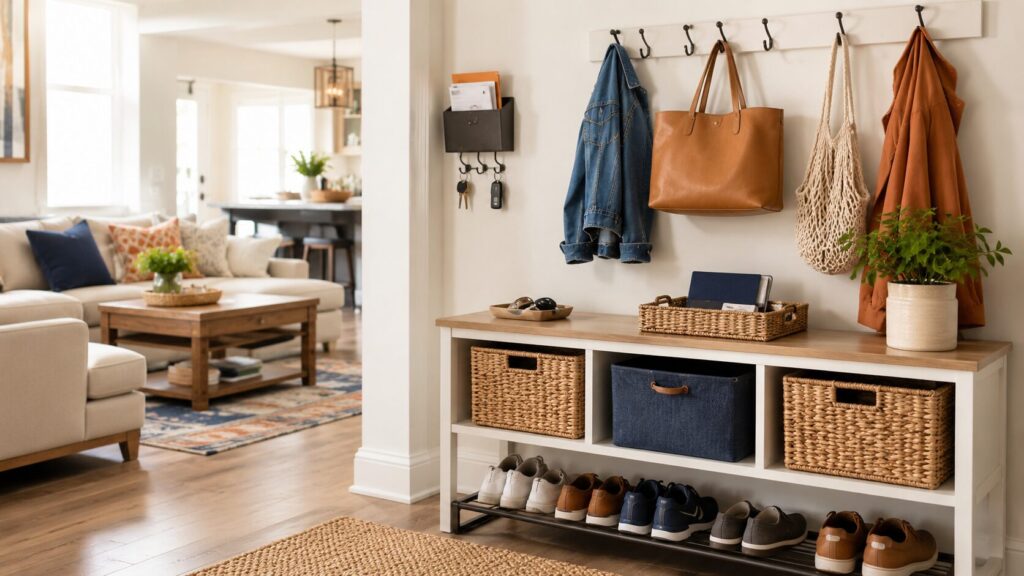
The entryway is one of the most important areas in a busy home.
It is where shoes, bags, keys, coats, mail, and everyday items often land.
A good entryway system can prevent clutter from spreading into the rest of the house.
You do not need a large space. Even a small entry area can work well with the right setup.
Consider adding:
A small shoe rack
Hooks for bags or jackets
A tray for keys
A basket for mail
A place for sunglasses or wallets
A mat for everyday shoes
When the entryway has a clear system, it becomes easier to leave and return home without creating a mess.
Use the “Never Leave Empty-Handed” Habit
This is a simple habit that can make your home feel more organized without adding extra cleaning time.
Whenever you leave a room, take one item that belongs somewhere else.
If you are walking from the living room to the kitchen, take a cup with you.
If you are going upstairs, take folded laundry.
If you are going to the bedroom, bring a book, sweater, or charger that belongs there.
This habit works because it uses movement you are already doing.
Over time, it prevents clutter from collecting in the wrong rooms.
Avoid Overcomplicated Organization Systems
Beautiful storage systems may look good online, but they do not always work in real life.
If a system requires too much time, too many labels, or too many steps, it may not last.
The best organization system is the one you can actually maintain.
For a busy home, choose systems that are:
Easy to see
Easy to reach
Easy to clean
Easy to repeat
Easy for others to understand
A simple basket that gets used every day is better than a perfect storage system that no one follows.
Schedule Small Weekly Maintenance
Daily habits help, but some areas need weekly attention.
Choose one short weekly maintenance session to handle things that build up over time.
This can include:
Clearing old mail
Cleaning out the fridge
Resetting the pantry
Organizing bathroom products
Putting away random items
Checking laundry areas
Decluttering one small drawer
You do not need to do everything every week.
Pick one or two tasks that make the biggest difference in your home.
A small weekly reset can prevent clutter from becoming a major project later.
Get Everyone Involved
If more than one person lives in the home, organization should not depend on one person only.
Everyone can help in simple ways.
Children can put toys in baskets.
Teenagers can manage their own laundry or bedroom.
Adults can reset shared spaces.
Guests and family members can learn where common items belong.
The easier your system is, the easier it is for others to follow.
Do not expect everyone to organize the same way. Instead, create simple rules that make sense for your household.
For example:
Shoes stay by the door.
Mail goes in one tray.
Dishes go in the sink or dishwasher.
Toys return to the basket before bedtime.
Bathroom counters get cleared after use.
Simple rules are easier to remember and repeat.
Make Peace With Imperfect Progress
Some days will be messy.
That does not mean your system failed.
A busy life will always create moments when the home feels out of order. The important thing is having simple habits that help you reset without starting over completely.
Organization is not one big project. It is a series of small decisions repeated over time.
When your home has clear places for items, simple daily habits, and realistic routines, it becomes much easier to manage.
You do not need a perfect home.
You need a home that supports your life.
Final Thoughts
Keeping your home organized when you are busy is not about doing more. It is about making everyday tasks easier.
Start small. Give items a home. Reset the most important areas. Use baskets, labels, and simple storage systems. Build habits around routines you already have.
The more realistic your system is, the more likely it is to last.
A calm and organized home does not happen all at once. It is built through small habits that make daily life feel lighter, easier, and more manageable.
FAQ
How can I keep my house organized with a busy schedule?
Focus on small daily habits instead of large cleaning sessions. Use a 10-minute evening reset, clear important surfaces, and give everyday items a specific place to return to.
What is the easiest room to organize first?
Start with a small, high-impact area such as the kitchen counter, entryway, bathroom sink, or one drawer. Finishing a small area quickly helps build momentum.
How do I stop clutter from coming back?
Clutter usually returns when items do not have a clear home. Create simple storage places for daily items and remove things you no longer use.
Are baskets good for home organization?
Yes. Baskets are useful for quick cleanup, especially in living rooms, entryways, bathrooms, closets, and kids’ areas. They work best when used as part of a simple system.
How often should I declutter my home?
You can declutter in small weekly sessions. Choose one drawer, shelf, cabinet, or surface at a time instead of trying to organize the entire house in one day.