Help a new dog settle in with practical advice on preparation, routines, safe spaces, first days, and introductions to people and pets. This guide breaks down the topic in a clear and practical way for everyday readers.
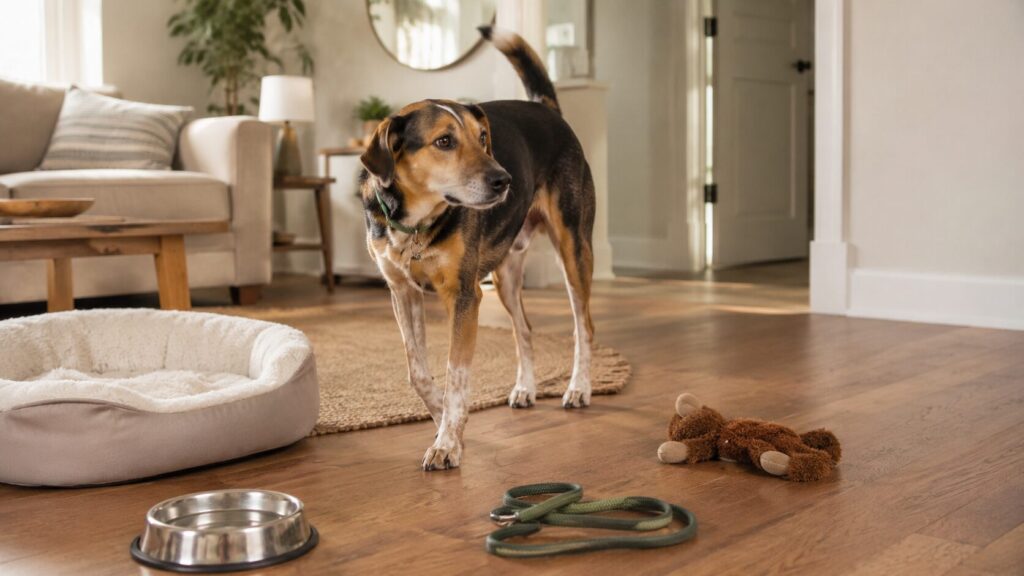
A New Home Is a Big Adjustment for a Dog
Even confident dogs need time to understand a new environment. Different smells, routines, rules, people, and sounds can make the first days tiring and confusing.
A successful transition depends on preparation and patience. The goal is not to impress the dog with too much activity. It is to create clarity, safety, and predictable structure.
Prepare the Space Before Arrival
Set up a quiet rest area with a bed or crate if the dog is crate-trained, along with water, a chew, and a few appropriate toys. Remove unsafe items from reach and decide where the dog will eat, sleep, and go outside.
Everyone in the home should understand the basic plan. Consistency matters. If one person allows the dog on the sofa and another does not, the first week becomes more confusing than it needs to be.
Keep the First Day Calm
Avoid inviting many guests or overwhelming the dog with too much exploration. Start with a brief walk to relieve stress, then bring the dog inside and allow quiet sniffing of a limited area.
Give the dog time to rest. Some dogs seem overly excited at first, while others appear shut down. Both can be normal. Eat, drink, sleep, and bathroom habits may take a little time to stabilize.
Use Routine to Build Security
Predictable times for meals, walks, bathroom breaks, training, and quiet rest help a dog learn what to expect. Keep cues simple and reward desirable behavior early.
Supervise closely at first. Management is part of training. Baby gates, leashes indoors when needed, and easy access to the outdoors can prevent mistakes while the dog learns the layout and household rules.
Introducing Other Pets and Family Members
If the home already has pets, use gradual introductions. Start with scent exchange and controlled meetings in calm conditions. Do not force close contact. Separate animals when supervision is not possible.
Teach children to approach gently, avoid crowding the dog, and respect resting spaces. A dog should always have somewhere to retreat without being followed.
When Progress Takes Time
Some dogs relax within days. Others need several weeks to feel secure. Shyness, reactivity, house-training issues, and sleep disruption may improve as the dog becomes more comfortable.
Seek help from a veterinarian or qualified trainer if the dog shows extreme fear, aggression, repeated gastrointestinal upset, refusal to eat, or serious difficulty adjusting.
Final Thoughts
A new dog settles best in a home that feels predictable rather than exciting. Keep the first days calm, create safe routines, supervise thoughtfully, and let confidence build at the dog’s pace.
Frequently Asked Questions
How long does it take a new dog to adjust?
It varies. Some dogs settle quickly, while others need several weeks or longer to feel comfortable.
Should I let a new dog explore the whole house right away?
Usually it is better to begin with a smaller area and expand access gradually.
What if my new dog will not eat?
A small appetite drop can happen during stress, but continued refusal to eat or other symptoms should be discussed with a veterinarian.
Can I start training on the first day?
Yes, but keep it simple, calm, and reward-based. Focus on routine and trust first.
How do I help a shy adopted dog?
Provide space, avoid forcing interaction, reward calm behavior, and allow the dog to approach at its own pace.