Make daily life easier for an aging dog with practical home changes for sleep, mobility, feeding, temperature, safety, and mental well-being. This guide explains the most important points in clear, practical steps.
Small Home Changes Can Make a Big Difference
Aging is different for every dog. Some remain active well into their later years, while others develop stiffness, hearing loss, reduced vision, dental problems, or changes in sleep and behavior. The goal is not to remove all activity. It is to make normal activities safer and less tiring.
Start by watching how your dog moves through the home. Notice slippery floors, stairs, high furniture, narrow pathways, cold sleeping areas, and food bowls that are difficult to reach. Simple adjustments can preserve independence and reduce frustration.
Create a Supportive Sleeping Area
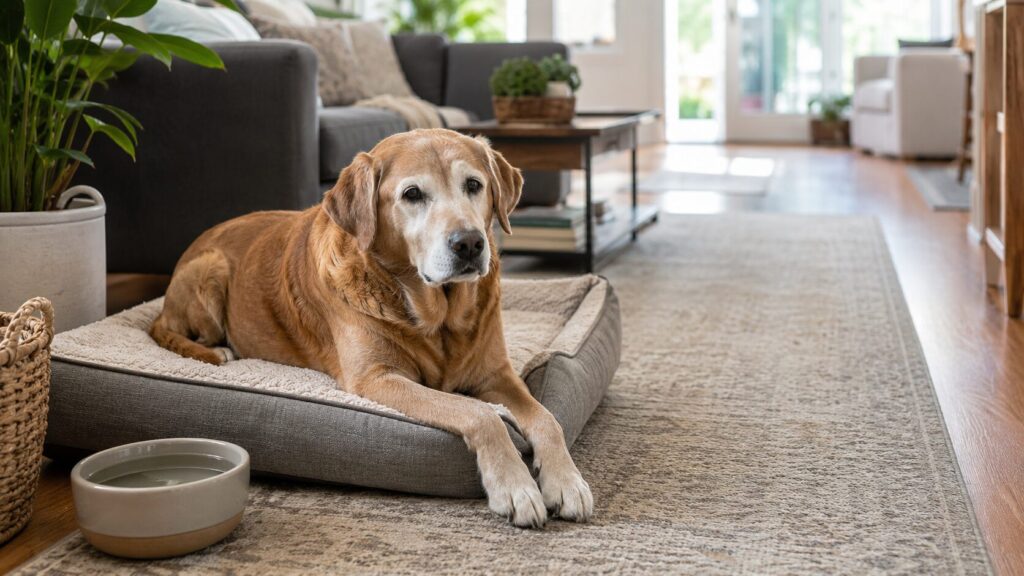
Senior dogs often sleep more and may have difficulty changing positions. Choose a bed that supports the body without being so soft that the dog sinks deeply. A low entry is helpful for dogs with arthritis or weakness. Place the bed in a quiet area near the family, away from drafts and excessive heat.
Washable covers are useful for dogs with accidents or skin problems. Some dogs appreciate more than one bed so they do not need to travel far to rest. Keep water nearby, but place it where spills will not create a slipping hazard.
Improve Traction and Mobility
Hard floors can become difficult for older dogs. Place nonslip rugs or washable runners along common paths between the bed, water, door, and family areas. Secure the edges so they do not slide or curl.
Ramps or stable steps can reduce jumping onto furniture or into a vehicle. Block stairs when a dog is likely to fall, especially at night. Keep nails trimmed and paw fur neat because long nails and excess fur can reduce traction. Ask a veterinarian or rehabilitation professional for guidance before introducing major exercise or mobility equipment.
Make Food, Water, and Bathroom Access Easier
Keep bowls in a consistent and easy-to-reach location. Some dogs with neck, back, or joint discomfort may benefit from an adjusted bowl height, but the best setup depends on the dog. Discuss significant feeding changes with a veterinarian.
Older dogs may need more frequent bathroom breaks and may not be able to wait as long as they once did. Provide a clear path to the door and use a night-light when vision is limited. Never punish accidents. Sudden house-soiling can be related to urinary disease, digestive problems, pain, medication, or cognitive decline.
Support the Senses and Daily Routine
Dogs with reduced vision or hearing often depend on routine. Avoid moving furniture unnecessarily and keep floors free of bags, cords, and clutter. Approach gently so you do not startle a dog that cannot hear you. Use touch, scent, and consistent hand signals when appropriate.
Mental activity still matters. Short sniffing walks, gentle training, food puzzles, and safe exploration can help maintain interest in daily life. Adjust the challenge so the dog succeeds without becoming exhausted or frustrated.
Work With Your Veterinarian
Regular veterinary care becomes especially important with age. Pain is not always obvious. Slower movement, irritability, licking a joint, difficulty sleeping, reduced appetite, or reluctance to climb may all be meaningful.
Ask about weight, dental health, vision, hearing, mobility, medications, nutrition, and cognitive changes. Do not give human pain relievers unless a veterinarian specifically directs you to do so, because many are dangerous for dogs.
Final Thoughts
Comfort for a senior dog comes from observing everyday challenges and removing unnecessary obstacles. Better traction, supportive rest, easy access to essentials, a stable routine, and appropriate veterinary care can help an aging dog remain secure and engaged.
Frequently Asked Questions
What type of bed is best for a senior dog?
A supportive bed with a low entry and washable cover is often helpful. The dog should be able to get on and off without struggling.
Should senior dogs still exercise?
Yes, but the type and amount should match the dog’s health. Short, regular, low-impact activity is often better than occasional intense exercise.
How can I help my old dog on slippery floors?
Use secured nonslip runners or rugs, keep nails trimmed, and create clear paths between important areas.
Why is my senior dog having accidents indoors?
Possible causes include reduced bladder control, urinary disease, digestive problems, pain, medication effects, or cognitive changes. A veterinary check is appropriate.
How often should a senior dog see a veterinarian?
The ideal schedule depends on age and health. Many senior dogs benefit from more frequent wellness visits than younger adults.