Grow fresh herbs on a small balcony with practical advice on sunlight, containers, soil, watering, wind protection, and beginner-friendly plants. This guide explains the most important points in clear, practical steps.
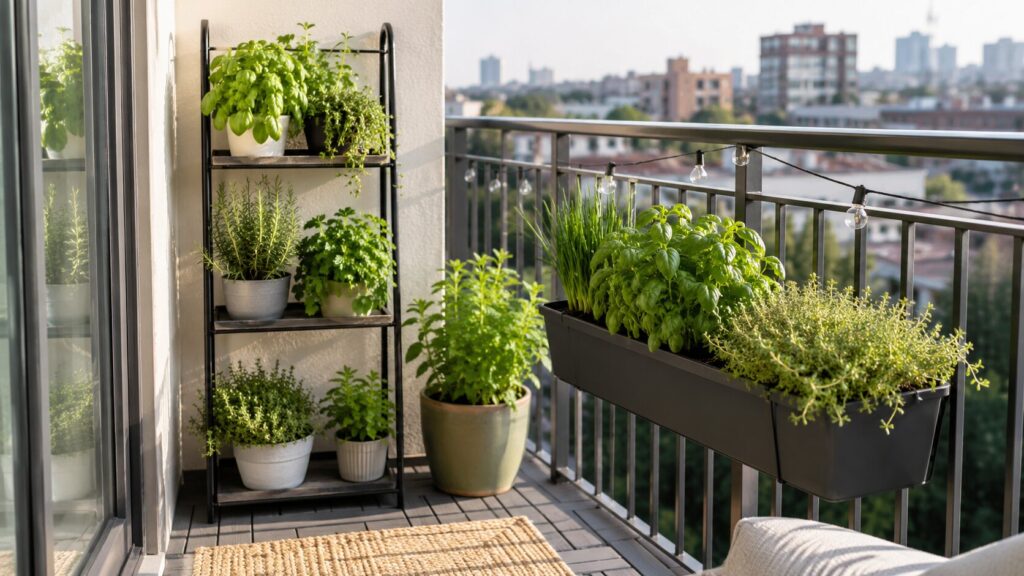
A Small Balcony Can Produce Useful Herbs
You do not need a large yard to grow basil, parsley, mint, chives, thyme, oregano, or rosemary. Most herbs adapt well to containers, and even a narrow balcony can hold several pots when the space is planned carefully.
Success depends less on size than on sunlight, drainage, wind, and consistent care. Before buying plants, observe the balcony for several days. Note when direct sun reaches it, where rain collects, and which areas receive strong wind.
Match Herbs to the Available Light
Many culinary herbs prefer at least six hours of direct sun. Basil, rosemary, thyme, oregano, and sage generally perform best in bright conditions. Parsley, chives, cilantro, and mint can tolerate somewhat less light, especially in hot climates.
A balcony that receives only reflected light may not support strong growth. In that case, choose the brightest location and keep expectations realistic. Avoid moving plants constantly unless the change is necessary, because stable conditions make watering and observation easier.
Choose Containers With Drainage
Every container should have drainage holes. Roots sitting in water are more likely to rot. Use saucers carefully and empty standing water after heavy rain. Lightweight pots are easier to move, but very small pots dry out quickly.
Choose containers that provide enough room for mature roots. Mint spreads aggressively and is usually best in its own pot. Rosemary and sage prefer excellent drainage. Window boxes and railing planters can save floor space, but they must be secured safely according to building rules.
Use the Right Soil
Do not fill containers with dense garden soil. Use a quality potting mix designed for containers. It should hold some moisture while allowing extra water to drain.
Herbs usually do not need heavy feeding. A balanced liquid fertilizer at reduced strength can support growth during the active season, but too much fertilizer may create soft growth with weaker flavor. Follow the product directions and adjust based on plant response.
Water Based on the Plant, Not the Calendar
Check the soil before watering. Insert a finger about an inch into the mix. If it feels dry at that depth, water thoroughly until a small amount drains from the bottom. Empty excess water from saucers.
Hot weather, wind, small pots, and dark containers increase water use. Cool or cloudy conditions reduce it. Mediterranean herbs such as rosemary and thyme prefer to dry slightly between waterings, while basil and parsley usually prefer more consistent moisture.
Protect Plants From Wind and Heat
Balconies can create strong wind tunnels. Wind dries leaves and soil, breaks stems, and can knock pots over. Place vulnerable plants near a wall, use heavier containers, and group pots so they shelter one another without blocking all airflow.
Concrete and glass can reflect heat. During extreme afternoon heat, move sensitive herbs into partial shade or use a light shade cloth. Water early in the day when possible.
Harvest to Encourage Growth
Harvest herbs regularly once the plants are established. Cut basil above a pair of leaves to encourage branching. Remove flower buds when you want continued leaf production. With parsley and chives, take the outer growth first.
Never remove most of a young plant at once. Frequent light harvesting is safer than occasional severe cutting. Inspect leaves for aphids, mites, caterpillars, and signs of fungal disease.
Final Thoughts
A productive balcony herb garden starts with observation. Match plants to the light, use containers with drainage, water according to soil conditions, and protect the pots from wind and extreme heat. Begin with a few herbs you cook with often and expand after learning how the space behaves.
Frequently Asked Questions
What herbs are easiest to grow on a balcony?
Chives, parsley, mint, thyme, oregano, and basil are common beginner choices when their light and watering needs are met.
Can herbs grow on a shaded balcony?
Some can tolerate partial shade, but growth may be slower. Parsley, chives, cilantro, and mint are better candidates than rosemary or basil.
How often should balcony herbs be watered?
There is no fixed schedule. Check the soil and water when the upper layer becomes dry.
Can I grow several herbs in one pot?
Yes, when they have similar water and light needs. Keep mint separate because it spreads aggressively.
Why are my potted herbs turning yellow?
Possible causes include overwatering, poor drainage, low light, nutrient problems, root crowding, or natural aging of older leaves.