Learn how to cool, portion, freeze, thaw, and reheat cooked rice safely while protecting its texture and reducing food waste. This guide explains the most important points in clear, practical steps.
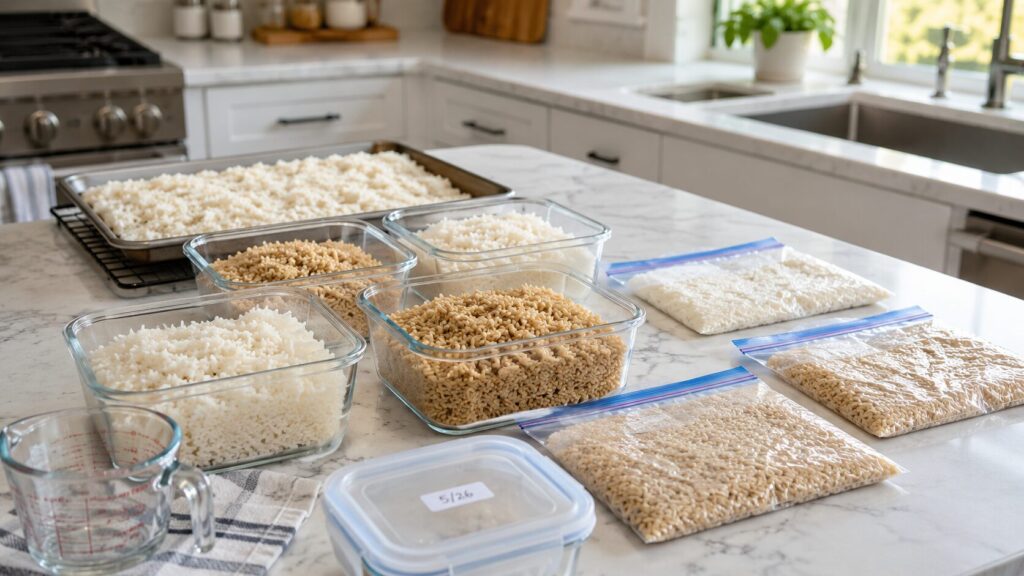
Can You Freeze Cooked Rice?
Yes. Cooked rice freezes well when it is cooled quickly, portioned correctly, and protected from air. Freezing is useful for meal prep, reducing waste, and keeping a simple side dish ready for busy days.
Food safety matters because cooked rice can support the growth of Bacillus cereus if it remains at room temperature for too long. Freezing does not remove toxins that may have formed before storage, so the most important step is handling the rice properly soon after cooking.
Cool the Rice Quickly
Do not leave a large pot of rice on the counter for several hours. Spread the cooked rice in a thin layer on a clean sheet pan or divide it into shallow containers so heat can escape faster. Refrigerate promptly once the rice stops steaming heavily.
The United States Department of Agriculture recommends refrigerating perishable food within two hours, or within one hour when the environment is above 90°F. Use clean utensils and avoid touching the rice unnecessarily.
Portion and Package It
Freeze rice in amounts that match how you normally use it. One- or two-cup portions are convenient for individual meals, bowls, soups, and side dishes. Place cooled rice in freezer-safe bags or containers.
Press excess air from bags, flatten them for faster freezing, and label each package with the type of rice and date. Flat bags also stack easily and thaw more evenly. For the best quality, use frozen rice within about one to two months, although it may remain safe longer when continuously frozen.
How to Reheat Frozen Rice
Rice can usually be reheated directly from frozen. Place a portion in a microwave-safe bowl, add one or two teaspoons of water per cup, and cover loosely. Heat in short intervals, stirring between each one, until the rice is steaming hot throughout.
For stovetop reheating, place the rice in a small saucepan with a splash of water. Cover and warm over low heat, stirring occasionally. A steamer also works well. Avoid repeated cycles of cooling and reheating.
How to Protect the Texture
Rice becomes dry when moisture escapes. Removing air from the package and adding a small amount of water during reheating helps restore softness. Do not overheat it after it is already hot.
Long-grain white rice, jasmine rice, basmati rice, and brown rice all freeze well. Very soft rice may become slightly more tender, while rice mixed with creamy sauces can separate. Freeze plain rice when you want the most flexible result.
Common Mistakes to Avoid
Do not freeze rice that has already sat at room temperature for an unsafe period. Do not place a very large amount of hot rice directly into a deep container, because the center may cool slowly. Avoid loosely wrapped packages that allow freezer burn.
Finally, do not rely only on smell. Harmful bacteria or toxins may not create an obvious odor. Safe timing and temperature are more reliable than appearance alone.
Final Thoughts
Freezing rice is simple, but safe cooling comes first. Spread or divide the rice, refrigerate it promptly, package it in useful portions, and reheat it until steaming hot. With good handling, frozen rice can save time without sacrificing much texture.
Frequently Asked Questions
How long can cooked rice stay in the refrigerator?
For best safety and quality, use refrigerated cooked rice within three to four days.
Can I freeze rice while it is still warm?
It should be cooled quickly and refrigerated promptly. Avoid sealing a large amount of very hot rice in a deep container.
Do I need to thaw rice before reheating?
No. Most portions can be reheated directly from frozen with a small splash of water.
Can brown rice be frozen?
Yes. Brown rice freezes well, although its texture may be slightly softer after reheating.
Can reheated rice be frozen again?
It is better to freeze individual portions and reheat only what you need. Repeated cooling and reheating can reduce quality and increase handling risk.