Daily walks are one of the most important parts of caring for a dog. They provide much more than just an opportunity to go to the bathroom—they support physical health, mental stimulation, and emotional well-being.
But how often should you actually walk your dog?
The answer depends on several factors, including age, breed, size, and overall health.
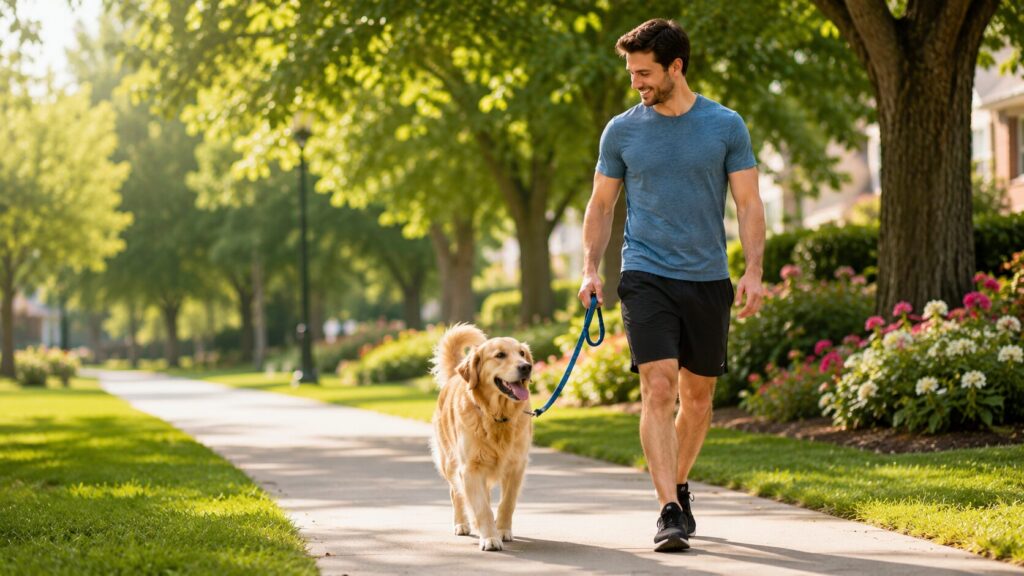
Why Daily Walks Matter
Walking benefits dogs in many ways.
Regular walks help:
- Maintain a healthy weight.
- Strengthen muscles and joints.
- Improve heart health.
- Reduce boredom.
- Prevent destructive behaviors.
- Encourage healthy socialization.
- Provide mental stimulation through new sights and smells.
Even short walks can make a meaningful difference.
Puppies Need Shorter Walks
Young puppies are still growing.
Instead of long walks, they benefit from several short outings throughout the day.
A general guideline is about five minutes of walking per month of age, up to twice daily.
For example:
- 3-month-old puppy: around 15 minutes.
- 4-month-old puppy: around 20 minutes.
- 5-month-old puppy: around 25 minutes.
Always avoid overexertion while bones and joints are still developing.
Adult Dogs Usually Need More Exercise
Healthy adult dogs generally benefit from at least one to two walks every day.
Many medium and large breeds thrive with:
- 30 to 60 minutes of daily walking.
- Interactive play sessions.
- Opportunities to explore new environments.
Highly active breeds may require even more exercise to stay happy and well-balanced.
Senior Dogs Still Benefit From Walking
Older dogs may move more slowly, but they still need regular activity.
Shorter, gentler walks help maintain:
- Joint mobility.
- Healthy weight.
- Muscle strength.
- Mental engagement.
Adjust the pace according to your dog’s comfort level.
Breed Makes a Difference
Some breeds naturally require more exercise than others.
High-energy breeds often include:
- Border Collies
- Australian Shepherds
- Labrador Retrievers
- German Shepherds
- Siberian Huskies
Lower-energy breeds may be satisfied with shorter daily walks combined with indoor play.
Understanding your dog’s individual needs is more important than following a universal schedule.
Weather Matters Too
Extreme temperatures can affect your walking routine.
During hot weather:
- Walk early in the morning.
- Choose evenings after the pavement cools.
- Bring fresh water.
- Avoid hot asphalt.
During cold weather:
- Keep walks shorter if necessary.
- Dry your dog’s paws afterward.
- Watch for signs of discomfort.
Signs Your Dog Needs More Exercise
Some dogs clearly show when they need more activity.
Common signs include:
- Excessive barking.
- Chewing furniture.
- Digging.
- Restlessness.
- Hyperactivity indoors.
- Weight gain.
Increasing daily exercise often helps reduce these behaviors.
Quality Is Just as Important as Distance
Dogs enjoy exploring.
Allowing time to sniff, investigate new environments, and experience different routes provides valuable mental enrichment.
Sometimes a slower, more interesting walk is even better than simply covering a long distance.
Final Thoughts
There isn’t a single walking schedule that fits every dog.
Age, breed, health, and personality all influence how much exercise your companion needs.
The key is consistency. Daily walks—combined with play, affection, and proper nutrition—help dogs stay healthier, happier, and mentally stimulated throughout every stage of life.