Learn how often dogs should be bathed based on coat type, lifestyle, skin health, and breed needs, plus signs a dog may need more or fewer baths. This guide breaks down the topic in a clear and practical way for everyday readers.
There Is No Single Bath Schedule for Every Dog
Some dogs need frequent bathing, while others do better with longer intervals between baths. Coat type, skin sensitivity, breed, environment, and activity level all influence how often a dog should be washed.
A dog that hikes in mud, swims often, or has skin issues will not have the same needs as a short-haired indoor dog that stays relatively clean. The goal is to keep the coat and skin healthy rather than to follow a rigid calendar.
What Affects Bath Frequency
Dogs with oily coats may need bathing more often than dogs with dry or sensitive skin. Long-haired dogs can collect dirt and debris more easily, while hairless breeds may need regular skin care to manage oil buildup. Dogs with allergies, medicated skin routines, or certain medical conditions may need a veterinary-guided schedule.
Lifestyle matters too. A city apartment dog that spends most time indoors may stay clean longer than a farm dog or a dog that visits beaches and parks several times a week.
General Bathing Guidelines
Many healthy dogs do well with a bath about once a month, but that is only a starting point. Some may do well every six to eight weeks, while others may need more regular washing. Overbathing can strip natural oils and irritate the skin, especially if harsh products are used.
Instead of bathing too often, support hygiene through regular brushing, wiping paws after outdoor walks, cleaning bedding, and grooming problem areas such as the beard, paws, and rear coat.
Signs Your Dog May Need a Bath
A strong body odor, visible dirt, greasy fur, sticky buildup, and a dull-looking coat can all suggest it is time for a bath. Dogs that scratch more than usual after getting dirty may also benefit from cleaning, but itching can have many causes.
Do not assume odor always means the dog is simply dirty. Ear disease, skin infections, dental disease, and anal gland problems can also cause unpleasant smells and should be evaluated if the odor is unusual or persistent.
How to Bathe a Dog More Safely
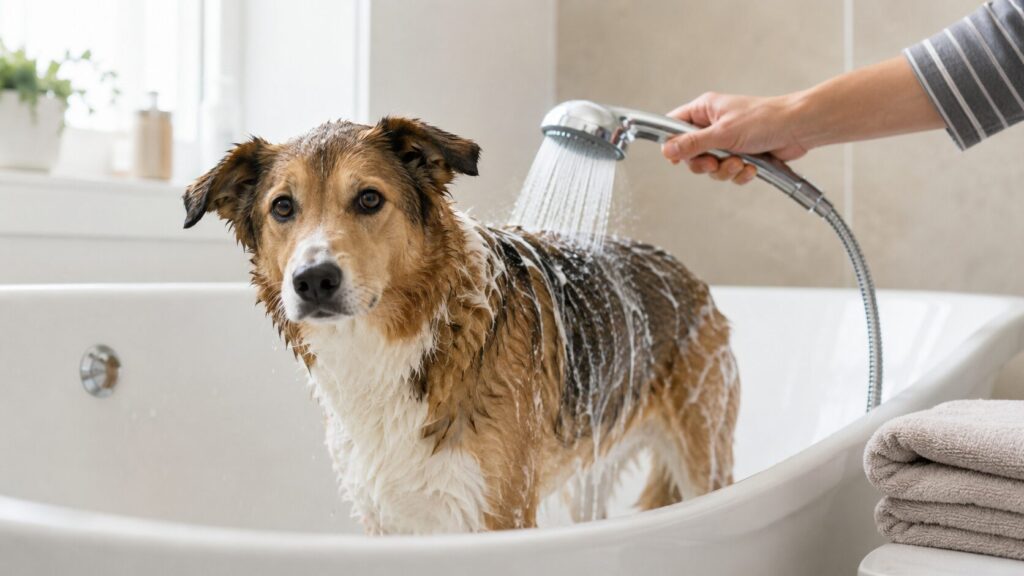
Use a shampoo made for dogs rather than human products. Brush the coat before bathing when appropriate, use lukewarm water, and rinse very thoroughly. Residual shampoo can irritate the skin. Dry the coat well, especially in dogs with dense fur or skin folds.
Protect the ears from direct water flow and reward the dog calmly during the process. Keep sessions short and positive whenever possible.
When to Ask a Veterinarian or Groomer
Contact a veterinarian if your dog has redness, hair loss, flaky skin, a bad odor, chronic itching, sores, or repeated skin infections. Some dogs need medicated baths, and the correct product matters.
A professional groomer can also help establish a realistic schedule based on coat maintenance, shedding, matting risk, and your dog’s tolerance for home grooming.
Final Thoughts
Bathing a dog is less about a fixed rule and more about matching care to the individual dog. Watch the coat, skin, and lifestyle, use appropriate products, and avoid excessive washing that can lead to dryness or irritation.
Frequently Asked Questions
Can I bathe my dog every week?
Some dogs can tolerate weekly baths with the right products, but many do not need them. Frequent bathing should match the dog’s skin and coat needs.
What if my dog smells bad soon after a bath?
Persistent odor may point to ear disease, dental problems, skin infection, or another issue rather than simple dirt.
Should short-haired dogs be bathed less often?
Often yes, but not always. Skin type, activity level, and odor still matter.
Can I use baby shampoo on my dog?
It is better to use a shampoo made specifically for dogs because canine skin has different needs.
How do I know if I am bathing my dog too often?
Dry skin, increased itching, a dull coat, and irritation can be clues that the schedule or product may be too harsh.