Cook tender, flaky air fryer salmon with lemon, garlic, and simple seasonings in less than 15 minutes, with tips for timing and doneness. This guide explains the most important points in clear, practical steps.
Why Salmon Works Well in an Air Fryer
An air fryer circulates hot air around the fish, helping the surface cook quickly while the center stays moist. It is especially useful for small portions and weeknight meals because preheating and cleanup are usually faster than with a full oven.
The exact cooking time depends on the thickness of the fillet, whether the skin is attached, the starting temperature of the fish, and the air fryer model. Use time as a guide and check the salmon early.
Ingredients
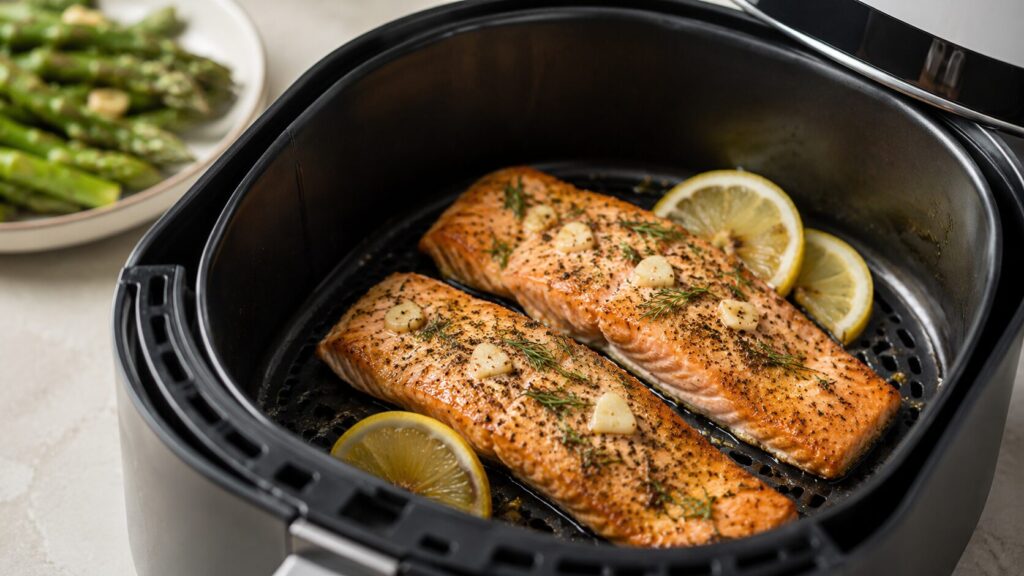
For two servings, use two salmon fillets, about 5 to 6 ounces each. You will also need 1 tablespoon olive oil, 1 small garlic clove finely grated or 1/2 teaspoon garlic powder, 1/2 teaspoon paprika, 1/2 teaspoon dried dill or parsley, 1/4 teaspoon salt, a small amount of black pepper, and fresh lemon.
Optional additions include a thin layer of Dijon mustard, red pepper flakes, or a small amount of honey added near the end of cooking.
Step-by-Step Instructions
Preheat the air fryer to 390°F for about three minutes if your model recommends preheating. Pat the salmon dry. Mix the olive oil, garlic, paprika, herbs, salt, pepper, and one teaspoon of lemon juice. Brush the mixture over the top and sides of the fish.
Lightly oil the basket or use perforated air-fryer parchment designed for the appliance. Place the salmon skin-side down, leaving space between fillets. Cook for about 7 to 10 minutes. Thin fillets may finish sooner, while thick center-cut pieces may need longer.
How to Know When Salmon Is Done
The salmon should flake easily at the thickest point but still look moist. The U.S. Food and Drug Administration recommends an internal temperature of 145°F for fish. Some cooks remove salmon slightly earlier and allow carryover heat to finish it, but food safety guidance should be considered, especially for children, older adults, pregnant people, and anyone with a weakened immune system.
Use an instant-read thermometer inserted into the thickest section. Avoid repeatedly cutting the fish open, which releases moisture.
Tips for Better Results
Choose fillets with similar thickness so they finish together. Do not overcrowd the basket. Patting the surface dry improves browning, and a light coat of oil helps seasoning adhere.
If using a sweet glaze, add it during the last two or three minutes to reduce burning. Skin-on salmon is easy to lift after cooking and the skin can protect the bottom of the fillet. Let the fish rest for two minutes before serving.
What to Serve With Air Fryer Salmon
Serve the salmon with roasted vegetables, a simple salad, rice, quinoa, couscous, mashed potatoes, or steamed green beans. Lemon wedges and fresh herbs brighten the finished dish.
Leftover salmon can be flaked into a salad, grain bowl, pasta, or sandwich. Refrigerate promptly and use within three to four days.
Final Thoughts
Air fryer salmon is fast, flexible, and easy to adapt. Dry the fish, season lightly, leave space around each fillet, and check the thickest part early. A thermometer provides the clearest measure of doneness.
Frequently Asked Questions
Do I need to flip salmon in the air fryer?
Usually no. Hot air circulates around the fillet, and leaving it in place helps prevent breaking.
Can I cook frozen salmon in an air fryer?
Yes, but it will need additional time. Seasoning adheres better after the surface begins to thaw.
What temperature should I use?
About 390°F works well for many fillets, but air fryers vary, so check the fish early.
How do I keep salmon from drying out?
Use similar-size fillets, avoid overcooking, and remove the salmon as soon as it reaches the desired safe doneness.
Can I use parchment paper?
Use only air-fryer-safe perforated parchment and place food on it so it cannot lift into the heating element.