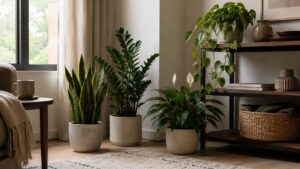
Indoor plants can make a home feel calmer, fresher, and more inviting.
They add natural color, soften empty corners, and bring life into rooms that may otherwise feel plain. But for beginners, taking care of plants can also feel confusing.
How much water do they need?
Where should they go?
What happens if the leaves turn yellow?
Can a plant survive if you forget about it for a few days?
The good news is that not every indoor plant is difficult to care for.
Some houseplants are much more forgiving than others. They can handle missed watering, lower light, and normal indoor conditions better than delicate plants.
If you are new to plant care, the best place to start is with simple, low-maintenance indoor plants that do not need constant attention.
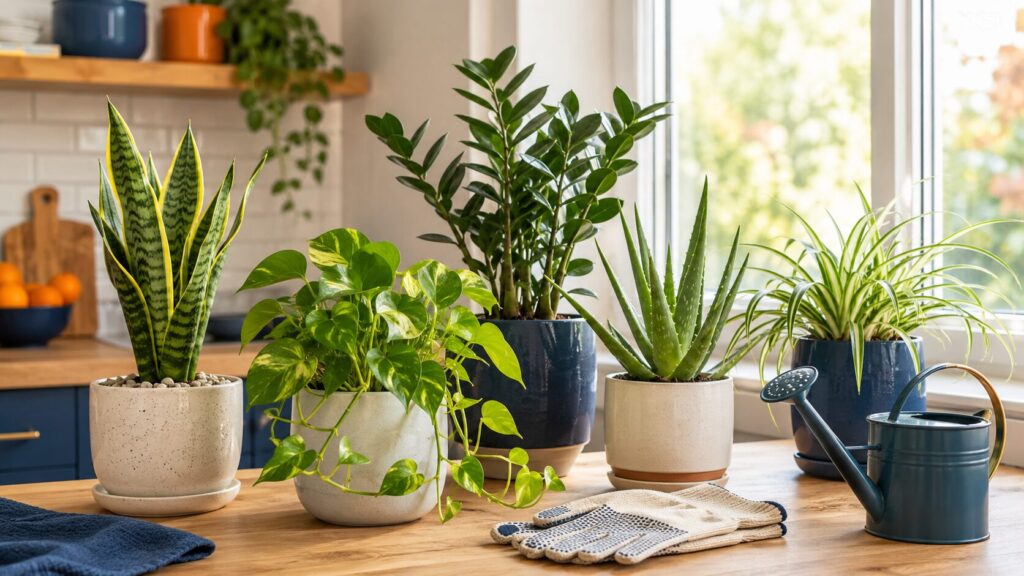
What Makes an Indoor Plant Low-Maintenance?
A low-maintenance indoor plant is not a plant you can completely ignore.
Every plant needs some care.
But beginner-friendly plants usually have a few things in common.
They can tolerate average indoor light.
They do not need daily watering.
They recover well from small mistakes.
They can grow in normal room temperatures.
They do not need frequent pruning or special humidity.
They are easy to place in different rooms.
For beginners, these qualities matter because plant care becomes much easier when the plant is flexible.
Instead of choosing a plant that needs perfect conditions, start with one that can adapt to your home.
Snake Plant
The snake plant is one of the most popular indoor plants for beginners.
It has tall, upright leaves that look modern and clean, making it a great choice for bedrooms, living rooms, offices, and entryways.
Snake plants are loved because they are very forgiving. They can handle low to bright indirect light and do not need frequent watering.
This plant is especially useful for people who forget to water often.
In fact, overwatering is usually a bigger problem than underwatering.
Let the soil dry out before watering again. If the soil still feels damp, wait a little longer.
Snake plants work well in simple pots and look good in minimalist, modern, or cozy home decor.
Pothos
Pothos is another excellent plant for beginners.
It grows trailing vines with heart-shaped leaves and can look beautiful on shelves, bookcases, desks, or hanging planters.
One reason pothos is so beginner-friendly is that it shows you when it needs attention.
If the leaves start to droop, the plant may need water. After watering, it often perks up again.
Pothos can grow in different lighting conditions, but it usually does best in bright, indirect light.
Avoid placing it in harsh direct sun for long periods, because the leaves may burn.
This plant is also easy to trim. If the vines grow too long, you can cut them back to keep the plant looking full and tidy.
ZZ Plant
The ZZ plant is a strong, stylish indoor plant with glossy green leaves.
It is a great option for people who want a plant that looks polished but does not need much attention.
ZZ plants can tolerate lower light and irregular watering better than many other houseplants.
They store water in their thick roots, which helps them survive dry periods.
This makes the ZZ plant a good choice for offices, bedrooms, hallways, and rooms where you may not check on plants every day.
Water only when the soil has dried out.
If you are unsure whether to water, it is usually better to wait.
The ZZ plant is a great reminder that low-maintenance plants can still look elegant and decorative.
Spider Plant
The spider plant is a classic beginner houseplant.
It has long, arching leaves and often produces small baby plants that hang from the main plant.
This gives it a lively, cheerful look.
Spider plants are easy to grow and adapt well to many indoor spaces.
They prefer bright, indirect light but can also handle some lower-light areas.
They like consistent watering, but they do not need complicated care.
Let the top of the soil dry slightly between waterings.
Spider plants look especially good in hanging baskets, plant stands, or shelves where their leaves can flow naturally.
They are a good option for anyone who wants a plant that feels relaxed and friendly rather than formal.
Peace Lily
The peace lily is a beautiful indoor plant known for its deep green leaves and white blooms.
It can add a soft, elegant look to a room without requiring advanced plant-care skills.
Peace lilies prefer indirect light and slightly moist soil.
They can also tell you when they need water because their leaves may droop. After watering, they often recover.
This plant does not like to dry out completely for too long, so it may need a little more attention than a snake plant or ZZ plant.
Still, it is a good beginner option for someone who wants a plant with flowers.
Place a peace lily in a bright room away from strong direct sunlight.
A bathroom, bedroom, or living room can work well if the space has enough natural light.
Heartleaf Philodendron
The heartleaf philodendron is a simple and attractive trailing plant.
It has soft, heart-shaped leaves and grows well in many indoor spaces.
Like pothos, it can trail from shelves or hang from baskets.
This plant is forgiving and does not need constant care.
It grows best in bright, indirect light but can adapt to moderate indoor light.
Water when the top layer of soil feels dry.
Heartleaf philodendrons are great for beginners because they grow steadily and are easy to style in the home.
You can let the vines trail naturally or trim them to keep the plant fuller.
Rubber Plant
The rubber plant is a good choice for people who want a larger indoor plant.
It has thick, glossy leaves and a bold shape that can make a room feel more designed.
Rubber plants prefer bright, indirect light.
They do not need daily watering, but they do like a more consistent routine than some very drought-tolerant plants.
Let the top part of the soil dry before watering again.
This plant can become a strong visual feature in a living room, office, or bedroom corner.
Because the leaves are large, they may collect dust. Wipe them gently from time to time so the plant looks fresh and clean.
Chinese Evergreen
Chinese evergreen is a beautiful and easy indoor plant with patterned leaves.
Some varieties have green, silver, cream, or pink tones, making them decorative without needing flowers.
This plant is popular because it can handle lower light better than many colorful houseplants.
It also does not need frequent watering.
Chinese evergreen is a good option for rooms that do not get intense sunlight.
It can work well in bedrooms, offices, and shaded living spaces.
Water when the soil starts to feel dry, and avoid letting the plant sit in standing water.
For beginners who want something a little more colorful, Chinese evergreen can be a great choice.
Cast Iron Plant
The cast iron plant has a name that fits its personality.
It is known for being tough and reliable.
This plant has dark green leaves and can handle lower light, irregular watering, and normal indoor conditions.
It grows more slowly than some other plants, but that can be a benefit for beginners.
A slower-growing plant usually needs less frequent trimming and repotting.
The cast iron plant works well in corners, hallways, bedrooms, and areas where more delicate plants may struggle.
It is not flashy, but it is dependable and easy to keep.
Aloe Vera
Aloe vera is a practical and attractive plant for sunny indoor spaces.
It has thick, pointed leaves and does best in bright light.
Unlike many leafy houseplants, aloe vera prefers dry conditions.
This makes it a good option for people who do not want to water often.
Let the soil dry out well between waterings.
Aloe vera is a good plant for windowsills, kitchen areas, home offices, or sunny shelves.
The most common mistake with aloe is overwatering. If the leaves become soft or the soil stays wet, the plant may be getting too much water.
How to Choose the Right Plant for Your Home
Before buying an indoor plant, think about your home’s conditions.
The best plant is not always the trendiest plant. It is the one that fits your space and lifestyle.
Ask yourself a few simple questions.
How much natural light does the room get?
Do you usually remember to water plants?
Do you want a small plant or a larger statement plant?
Do you have pets or children at home?
Do you want a plant for a shelf, floor, desk, or window?
If your home has low light, consider a snake plant, ZZ plant, cast iron plant, or Chinese evergreen.
If you have bright indirect light, pothos, spider plant, rubber plant, and philodendron can be good choices.
If you have a sunny window, aloe vera may work well.
Choosing based on your actual home makes plant care much easier.
Simple Care Tips for Beginner Plant Owners
Most beginner plant problems come from watering and light.
Many people water too often because they think more water means better care.
But many indoor plants prefer to dry out between waterings.
Before watering, touch the soil with your finger.
If it still feels moist, wait.
If it feels dry, the plant may be ready for water.
Also, avoid placing most indoor plants in harsh direct sunlight unless the plant specifically likes it.
Bright indirect light is usually safer for many common houseplants.
A good beginner routine is simple:
Check your plants once a week.
Feel the soil before watering.
Remove dead or yellow leaves.
Rotate the pot sometimes so the plant grows evenly.
Keep plants away from cold drafts or hot vents.
Use pots with drainage holes when possible.
This basic routine is enough for many low-maintenance indoor plants.
Common Beginner Mistakes to Avoid
New plant owners often make a few common mistakes.
The first mistake is watering on a strict schedule without checking the soil.
A plant may not need water every week. It depends on the plant, pot size, room temperature, light, and season.
The second mistake is putting every plant in the same spot.
Different plants need different light levels. A plant that likes bright light may struggle in a dark corner.
The third mistake is moving plants too often.
Plants need time to adjust to a new place. If you move them constantly, it can become harder to understand what they need.
The fourth mistake is buying too many plants at once.
Start with one or two easy plants. Once you feel comfortable, you can add more.
The goal is to build confidence slowly.
Are Indoor Plants Safe for Pets?
Some indoor plants may not be safe for cats or dogs if chewed or eaten.
If you have pets, check plant safety before bringing a new plant home.
You can also place plants on higher shelves, use hanging planters, or choose pet-friendlier options when possible.
Even with safer plants, it is smart to watch how your pets behave around them.
Some pets ignore plants completely, while others like to chew leaves or dig in soil.
For a pet-friendly home, plant placement matters just as much as plant choice.
Best Places to Put Indoor Plants
Indoor plants can work in many areas of the home.
A snake plant can look great beside a sofa, bed, or entry table.
A pothos can trail from a shelf or bookcase.
A spider plant can hang near a window.
A ZZ plant can brighten an office or hallway.
A rubber plant can fill an empty corner.
Aloe vera can sit on a sunny windowsill.
When decorating with plants, think about balance.
You do not need to fill every room with greenery.
A few well-placed plants can make your home feel fresh without making it cluttered.
Final Thoughts
Indoor plants are a simple way to make your home feel more peaceful and welcoming.
If you are a beginner, start with plants that are forgiving and easy to care for.
Snake plants, pothos, ZZ plants, spider plants, peace lilies, philodendrons, rubber plants, Chinese evergreens, cast iron plants, and aloe vera are all good options depending on your space.
Choose plants that match your light, routine, and lifestyle.
Start small, learn slowly, and avoid making plant care too complicated.
With the right low-maintenance indoor plants, you can enjoy a greener home without feeling overwhelmed.
FAQ
What is the easiest indoor plant for beginners?
Snake plant, pothos, and ZZ plant are among the easiest indoor plants for beginners because they are forgiving and do not need frequent watering.
Which indoor plants need the least water?
Snake plants, ZZ plants, aloe vera, and cast iron plants usually need less frequent watering than many other common houseplants.
Can indoor plants survive in low light?
Some indoor plants can tolerate lower light, including snake plants, ZZ plants, cast iron plants, and Chinese evergreens. However, most plants still need some natural or indirect light to stay healthy.
How often should beginners water indoor plants?
It depends on the plant and the room conditions. A good rule is to check the soil first. If the top layer feels dry, the plant may need water. If it still feels moist, wait.
What is the best indoor plant for a shelf?
Pothos and heartleaf philodendron are great shelf plants because their trailing vines can grow beautifully over the edge.